 AI-generated image
Guides
Straight answers
170 guides on strength training, running, food, recovery and using your AI assistant. Every number is sourced, and every page starts with the answer.
Strength training
Lifts, splits and how to keep getting stronger.
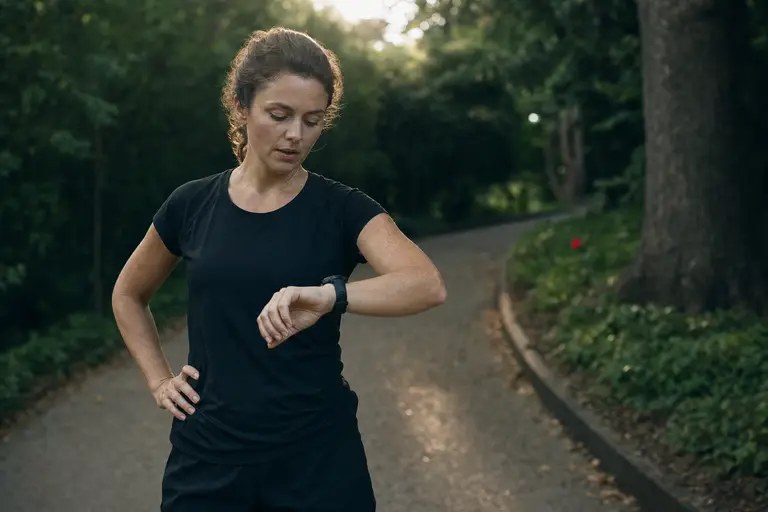
Are watch calories accurate?
They're rough estimates. Wrist devices measure heart rate well, but in a Stanford study of seven of them, none got within 20 percent on calories burned, and a 2025 review of 56 Apple Watch studies found an average calorie error of about 28 percent.
GLP-1 muscle loss
Some of the weight lost on semaglutide or tirzepatide is lean mass, not fat. Studies put it at about a quarter of the total.
Does Hevy work with Garmin?
No, not today. Hevy's help center says Garmin turned down its request for access, so there is no Hevy app for Garmin watches and no Garmin sync (read November 14, 2026).
Does the Strong app work with Garmin?
Not that we could find. Strong's own pages list iPhone, Android and Apple Watch, and its help center has nothing on Garmin (read November 14, 2026).
How to bench press
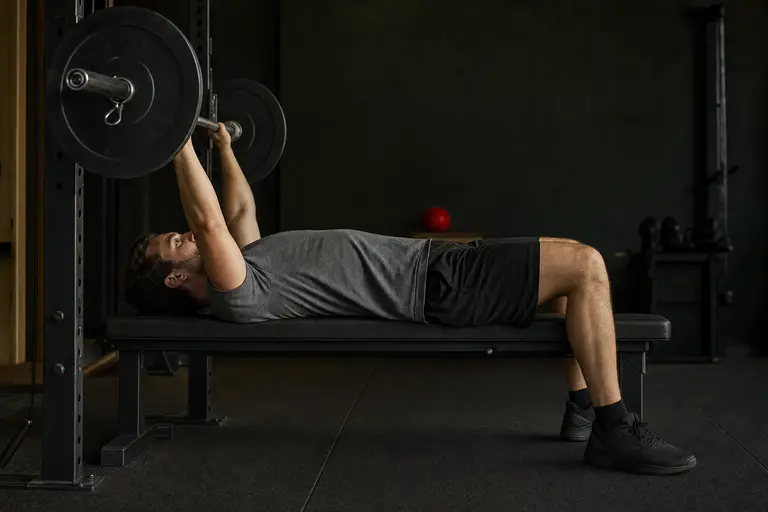
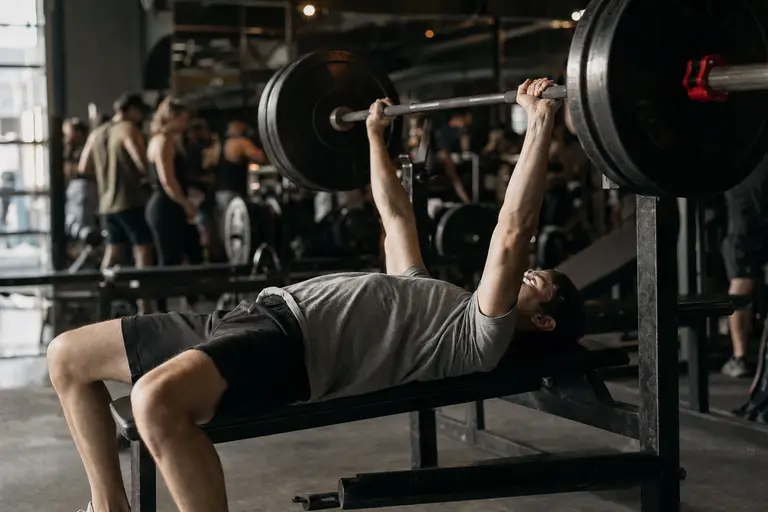
Lie on the bench with your eyes under the bar, feet flat and shoulder blades pulled back and down.
Choose a workout app
Start with what you actually do: lifting, running, classes or a mix. Then check how fast it is to log a set or start a run, and whether it gives you a plan or only records what you did.

How to create a workout plan
To create a workout plan, start with your goal and the number of days you can train, then pick a split that fits those days.
How to deadlift
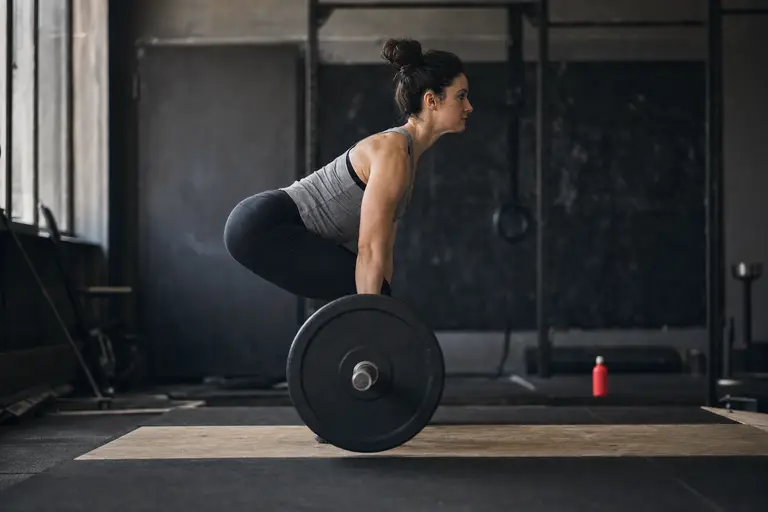
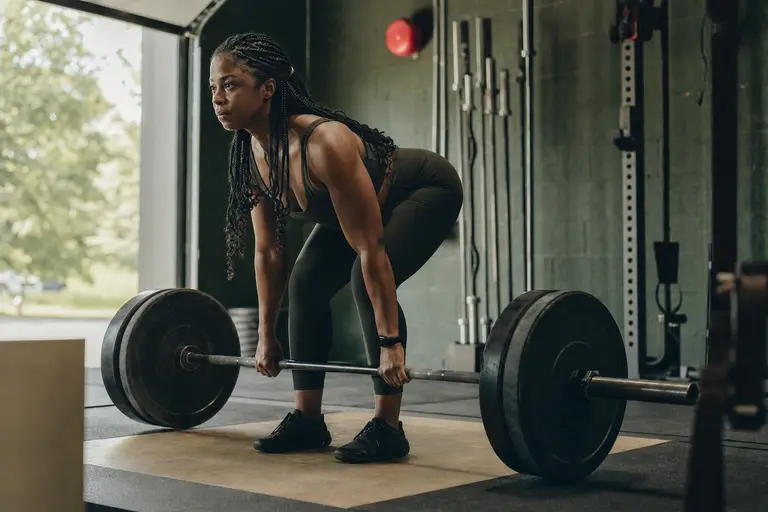
Stand with the bar over the middle of your feet, hip-width stance. Hinge down and grip the bar just outside your legs, bring your shins to the bar, then flatten your back and brace.
Home workout, no equipment
A home workout without equipment can train your whole body with six moves: squats, push-ups, reverse lunges, glute bridges, supermans and planks.
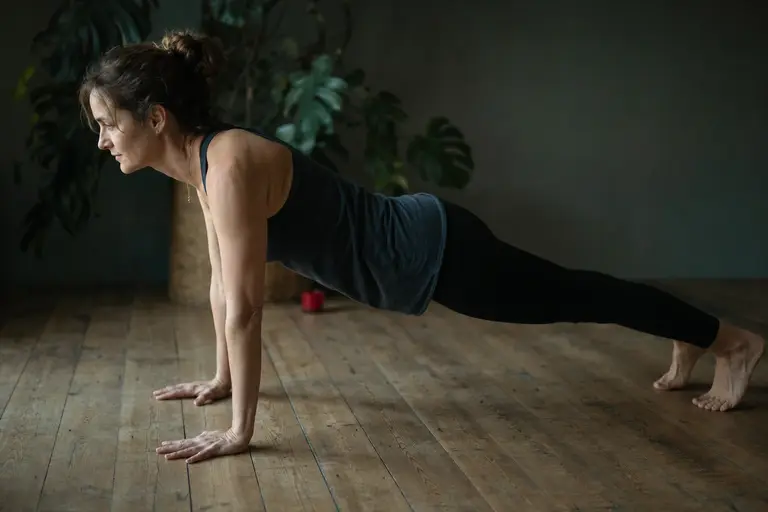
How to do push-ups
Start in a high plank with hands slightly wider than your shoulders and your body in a straight line from head to heels.
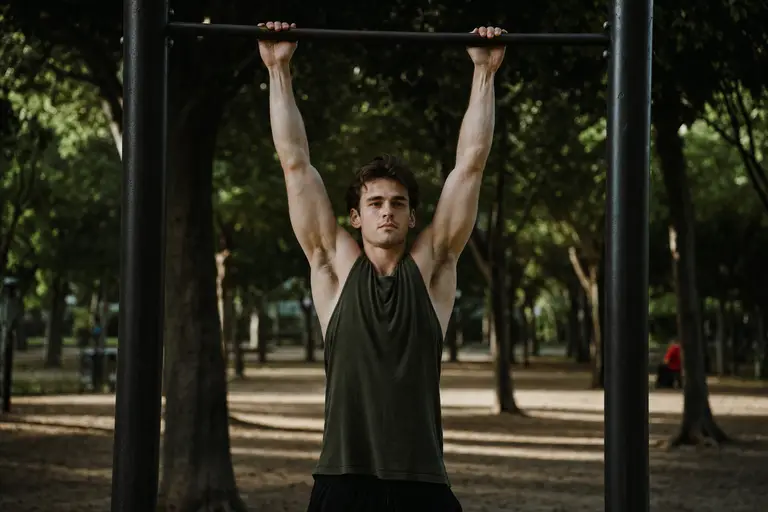
How to do a pull-up
Hang from a bar with straight arms and hands a little wider than your shoulders, pull your shoulder blades down, then pull until your chin clears the bar and lower all the way.
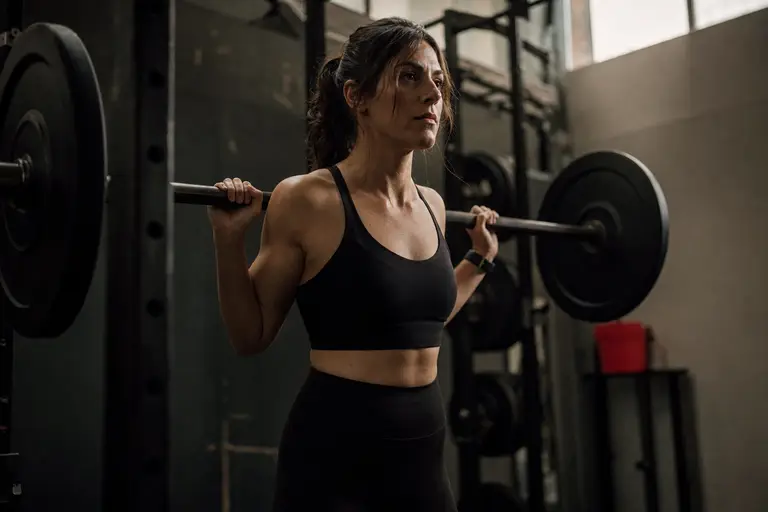
How to do a squat
To do a squat, stand with your feet about shoulder-width apart and toes turned out slightly.
Getting over gym anxiety
Gym anxiety is common, and it fades once you have a plan and a few visits behind you. Most of the fear comes from not knowing what to do or how much to lift, and from unwritten rules nobody explained.
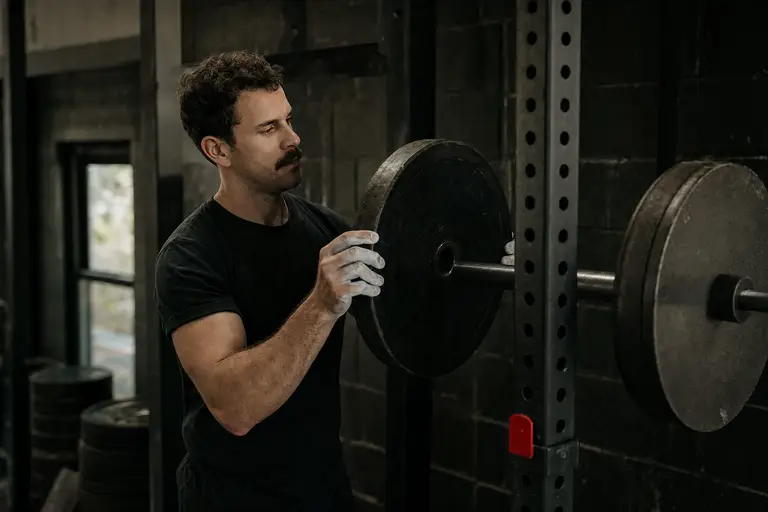
How to get stronger
Lift heavy for few reps on a handful of main exercises, about 1 to 6 reps with good form, two or three times a week, and add a little weight whenever you can.
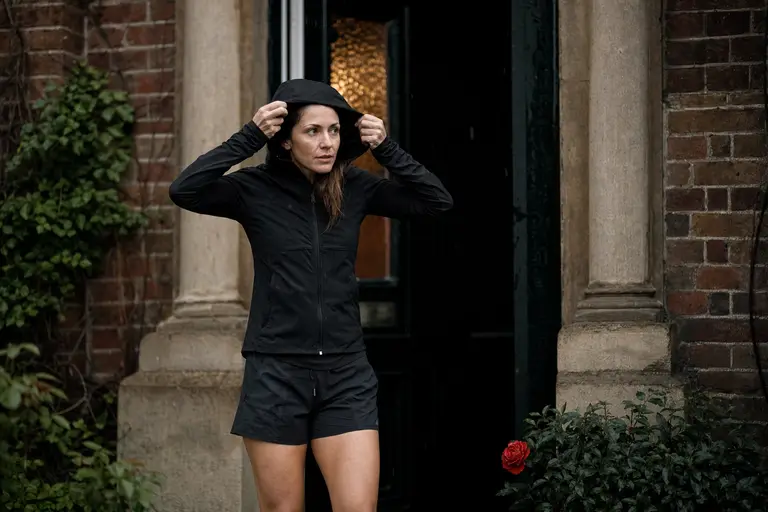
How to stay consistent with exercise
Plan exactly when and where you'll work out, and tie it to a cue you already have, like right after work.
Gym safety for beginners
Most gym injuries are avoidable with a few habits. Start lighter than you think, and learn each move before you add weight.
Track jiu jitsu without a watch
Log the session afterward. Tell your AI assistant what you did, like "an hour of jiu jitsu, 5 rounds of rolling", and TrainRec saves it to your log.
Strength training on Garmin
Start the Strength activity on your watch. It counts reps as you go, and after each set you can fix the rep count and add the weight you used.
Ab workout, no equipment
Planks, dead bugs, leg raises and bicycle crunches train your whole midsection with no equipment.
Arm workout, no equipment
Close push-ups and chair dips train the back of your arms with no equipment, and pike push-ups add your shoulders.
Back workout, no equipment
The back is the hardest area to train with no equipment, because its main job is pulling and you need something to pull on.
Chest workout, no equipment
Push-ups are the best chest exercise you can do with no equipment. Do 3 or 4 sets on 2 or 3 days a week.
Leg workout, no equipment
Squats, lunges, glute bridges and calf raises train every muscle in your legs with no equipment.
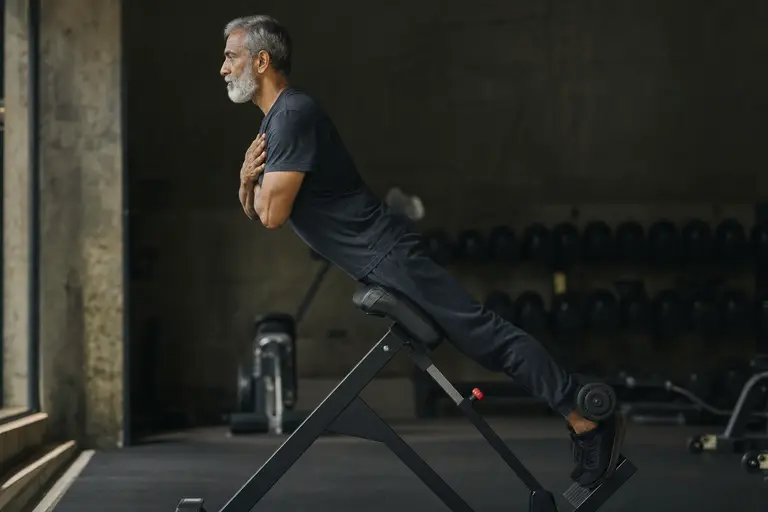
Back extension
To do a back extension, set the pad of the back extension machine just below your hip bones and hook your heels under the rollers.
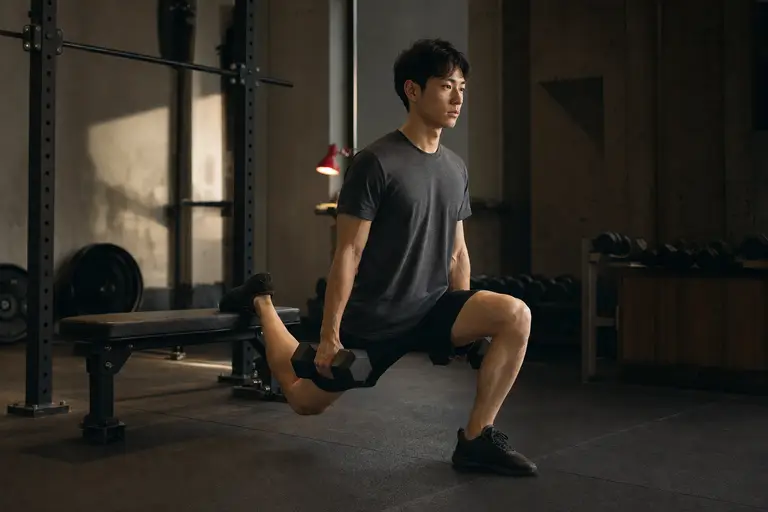
Bulgarian split squat
To do a Bulgarian split squat, stand a long step in front of a bench and rest the top of your back foot on it.
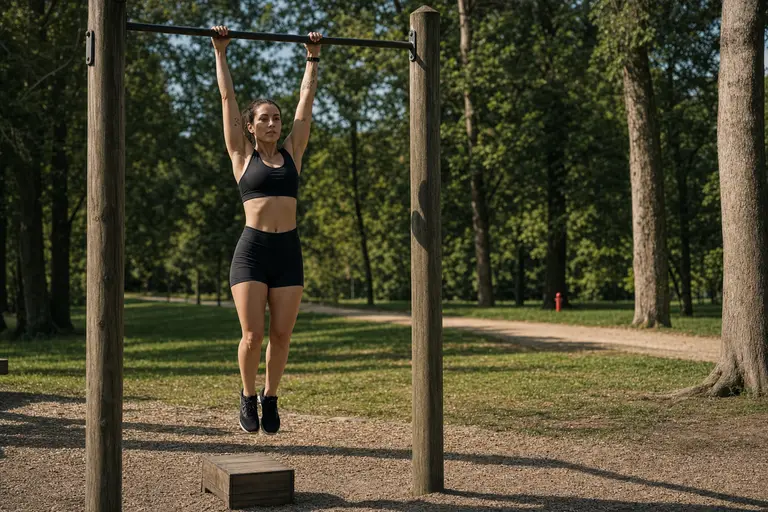
Dead hang
A dead hang is hanging from a pull-up bar with straight arms and your feet off the floor. Step up from a box to grab the bar with an overhand grip, then let your body hang while you keep a little tension in your shoulders.
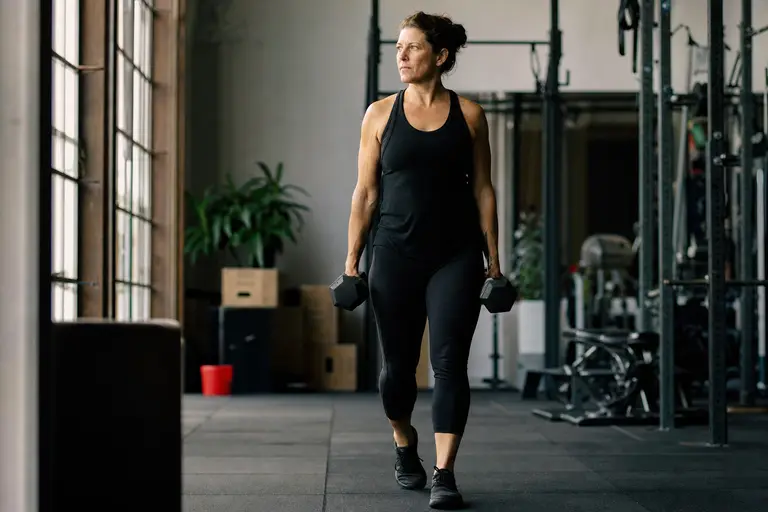
Farmers carry
Hold a heavy weight in each hand and walk with short, steady steps for a set distance or time, standing tall the whole way.
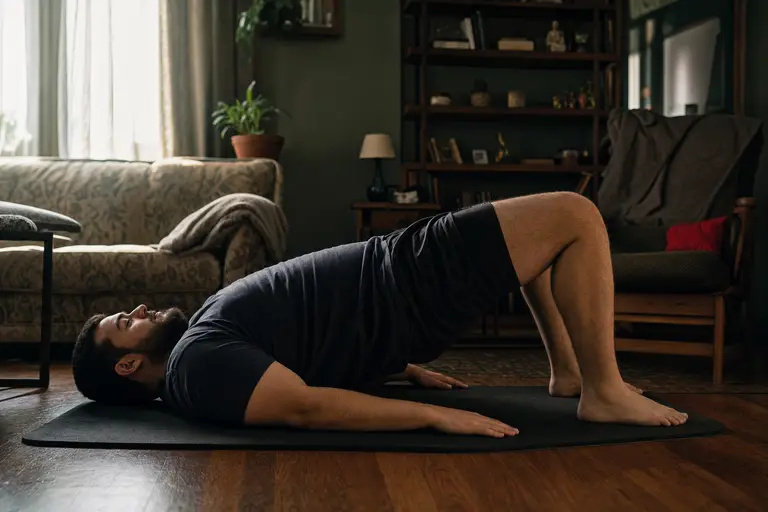
Glute bridge
To do a glute bridge, lie on your back with your knees bent and your feet flat on the floor, about hip-width apart.
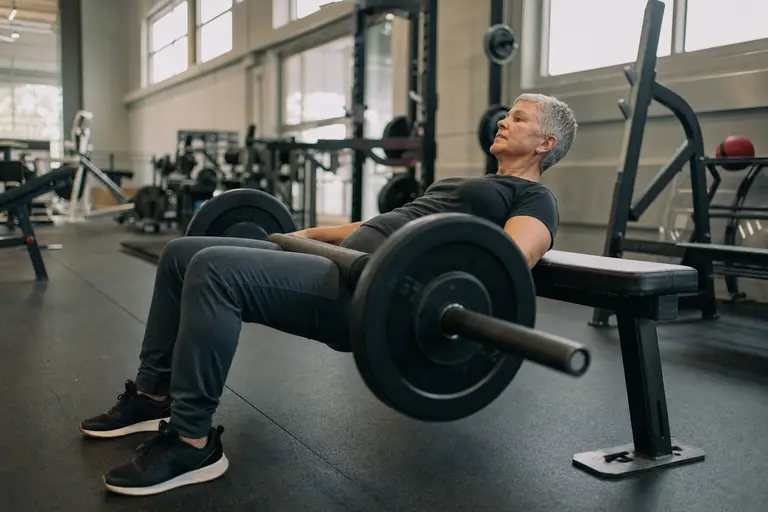
Hip thrust
To do a hip thrust, sit on the floor with your upper back against a bench and a weight across your hips.
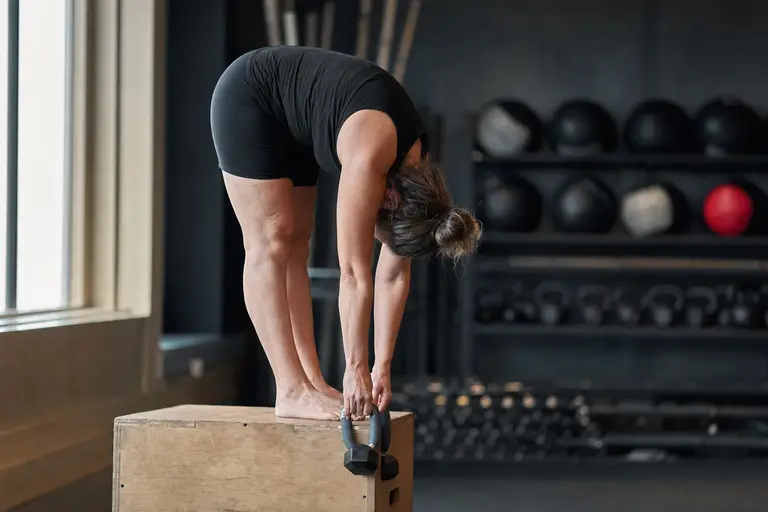
Jefferson curl
A Jefferson curl is a slow forward bend where you roll your spine down one section at a time while holding a light weight, then roll back up.
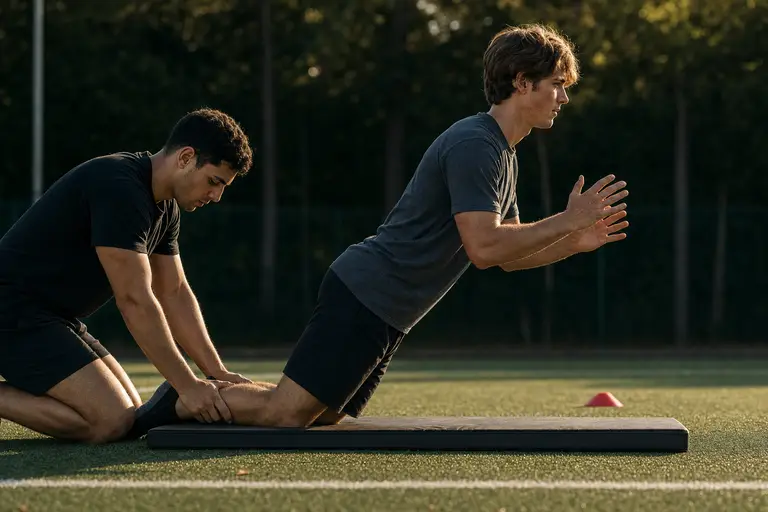
Nordic hamstring curl
Kneel with your ankles held down and your body straight from knees to head, then lower yourself toward the floor as slowly as you can.
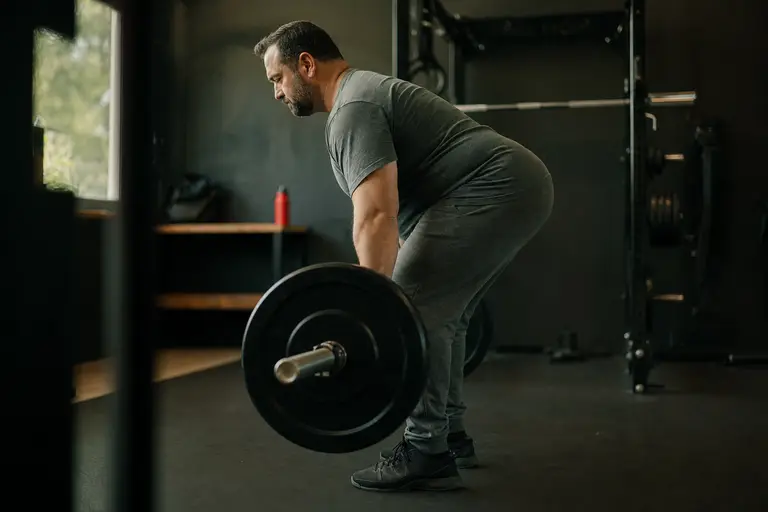
Romanian deadlift (RDL)
To do a Romanian deadlift (RDL), stand tall holding a barbell or two dumbbells against your thighs.
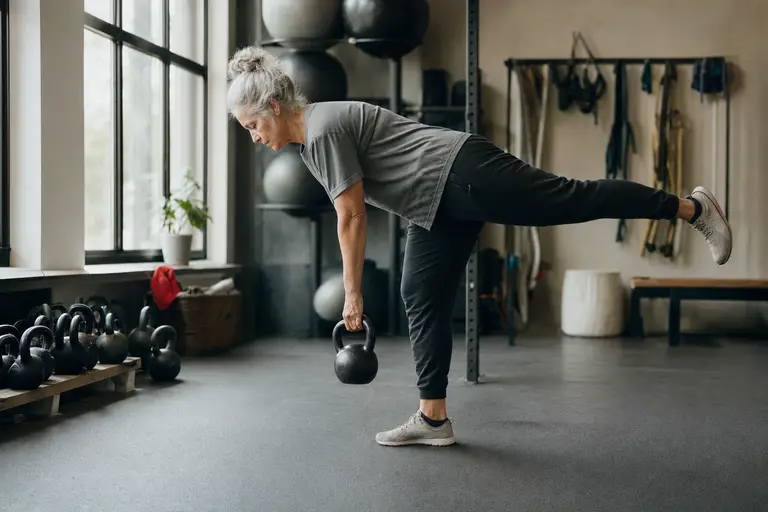
Single-leg RDL
To do a single-leg RDL (single-leg Romanian deadlift), stand on one leg with a soft knee and hold a dumbbell or kettlebell.
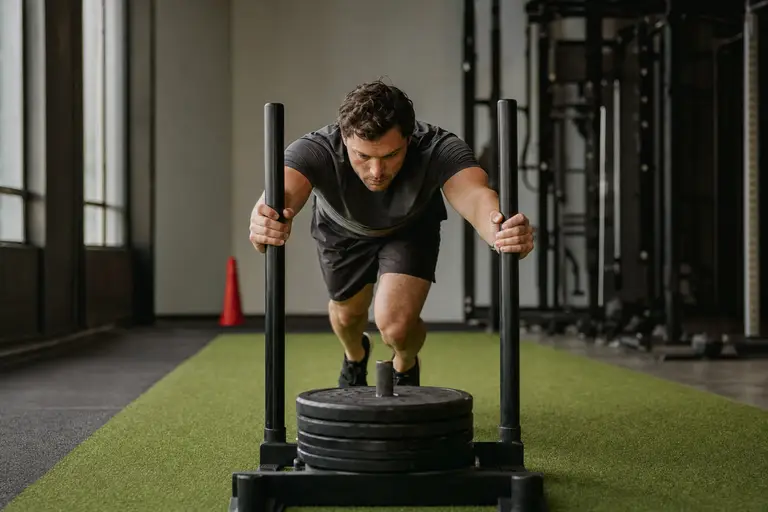
Sled push
Grip the sled's poles and lean in at a low angle, then drive it forward with short, quick steps.
Sumo squat
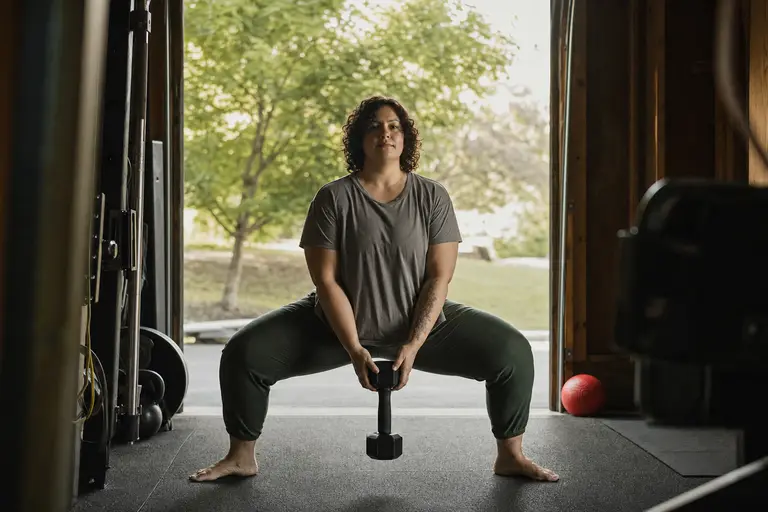
To do a sumo squat, stand with your feet wider than your shoulders and your toes turned out.
Tibialis raise
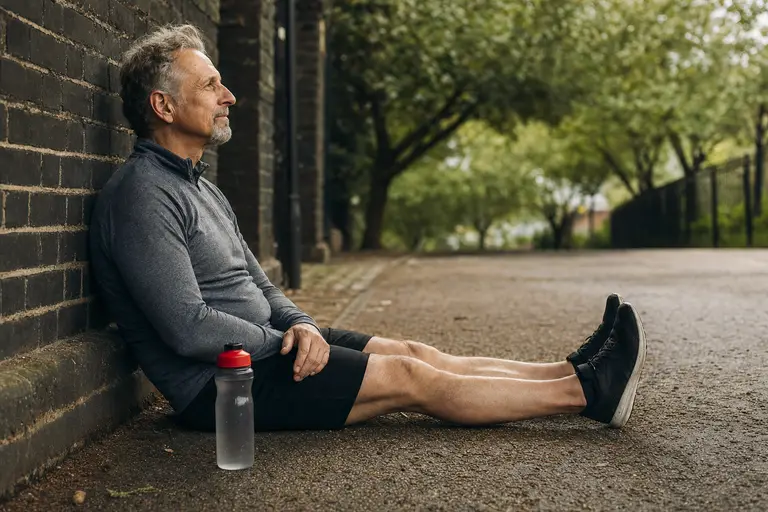
A tibialis raise works the muscle on the front of your shin, the one that lifts your foot.
Glute kickbacks
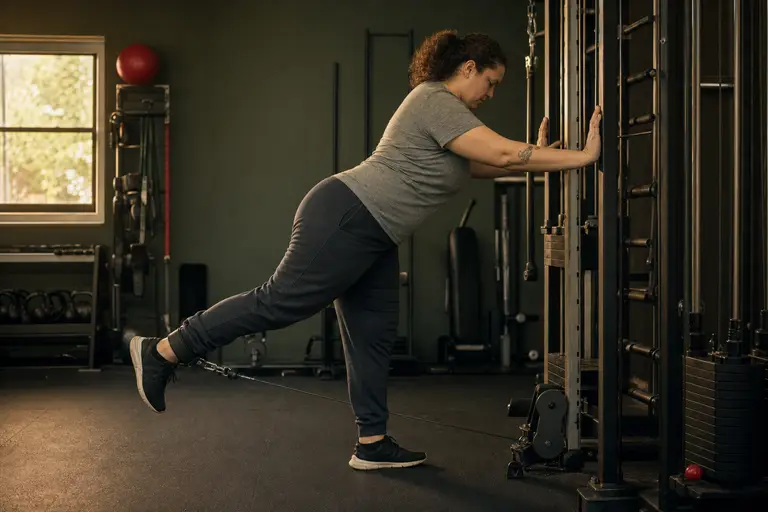
To do glute kickbacks on a cable, clip an ankle strap to a low pulley and face the machine, holding on for balance.
How to grow glutes
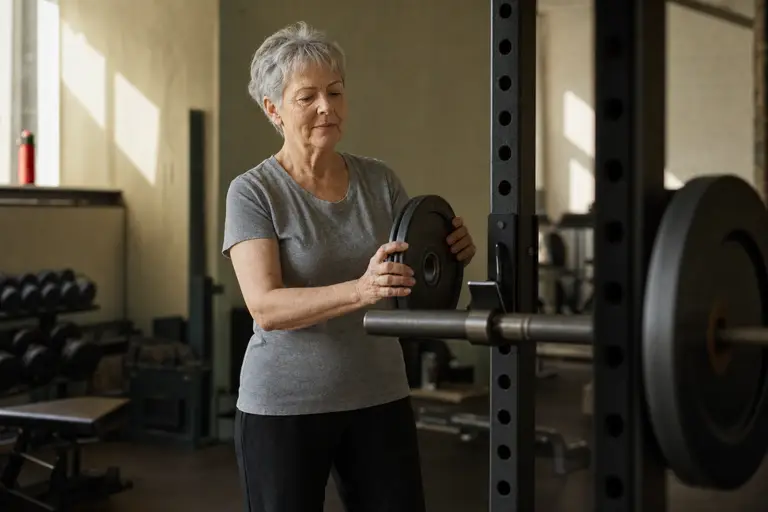
To grow your glutes, train them with loaded hip lifts such as hip thrusts, squats, Romanian deadlifts and split squats at least twice a week.
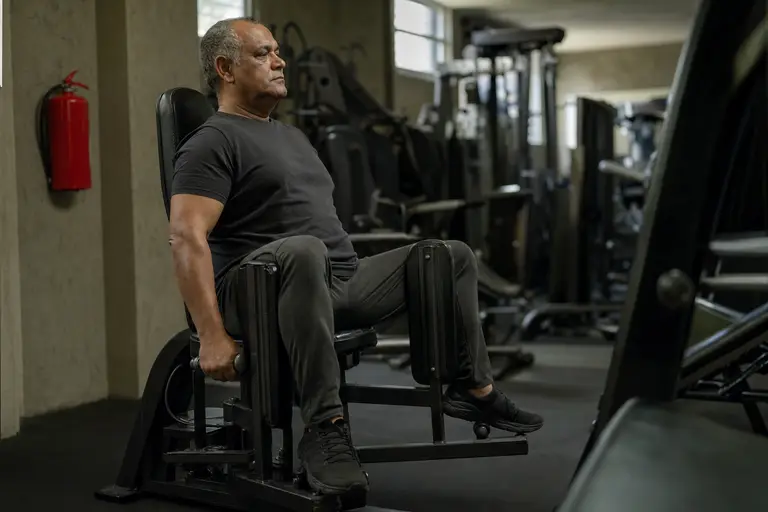
Hip abduction machine
To use the hip abduction machine, sit with your back against the pad and the leg pads against the outside of your knees.
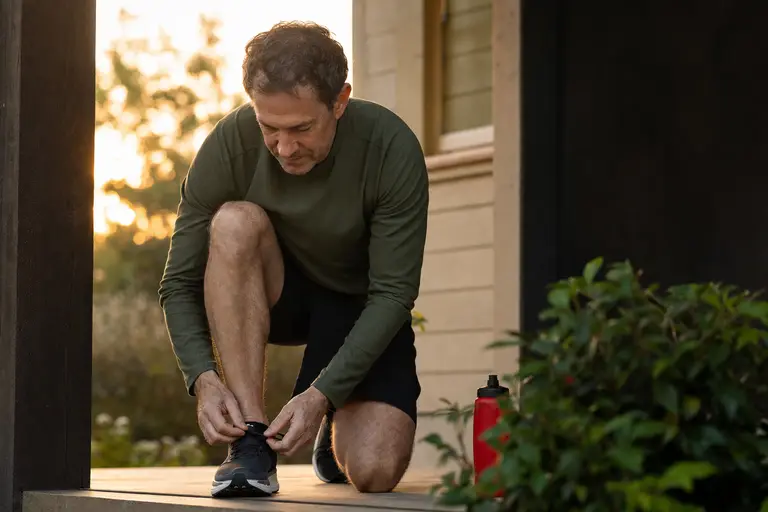
How long to see results
You'll usually feel stronger within 2 to 4 weeks of regular strength training, mostly because your nervous system gets better at using your muscles.
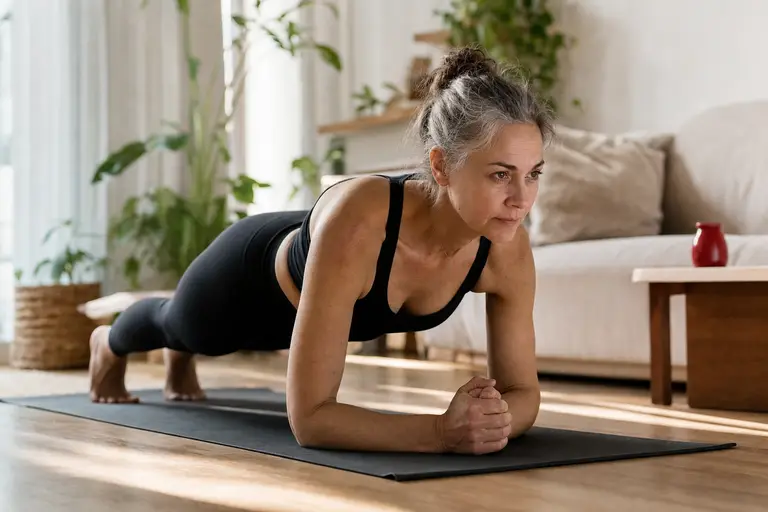
How long to hold a plank
Most people get more from a few holds of 10 to 60 seconds with good form than from one long hold.
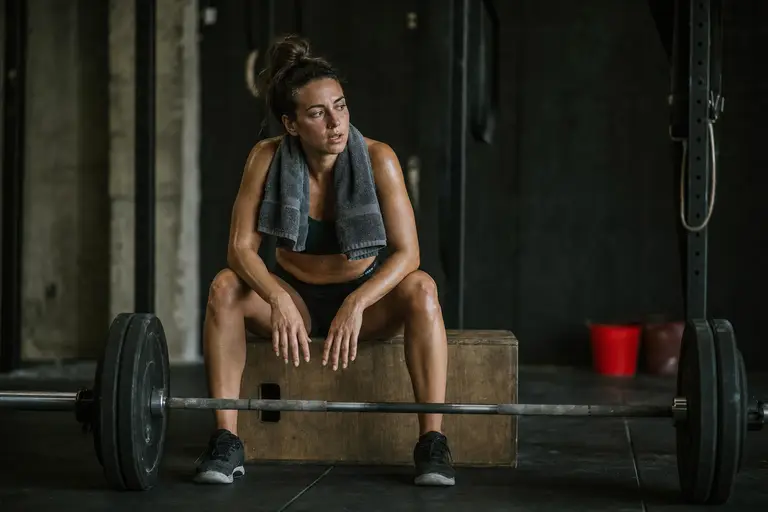
Rest time between sets
Rest about 2 to 3 minutes between sets of big lifts like squats, deadlifts and presses, and about 1 to 2 minutes for smaller exercises like curls or lateral raises.
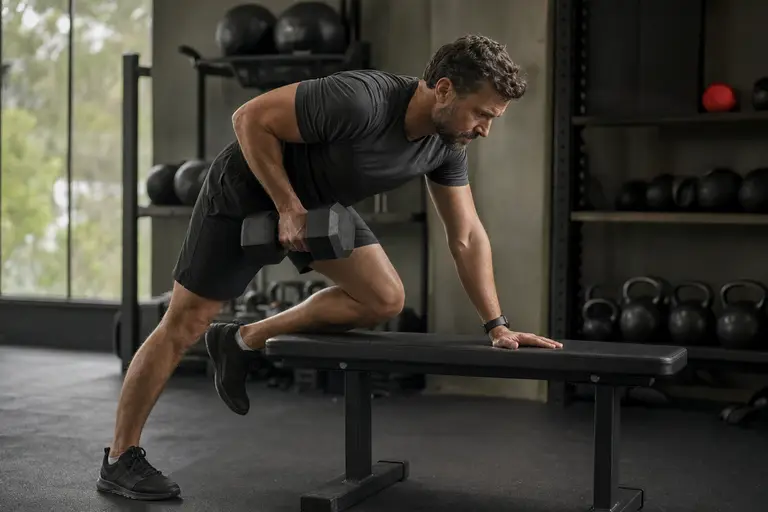
Calories burned lifting weights
A 30 minute weights session burns roughly 100 to 270 calories for people who weigh 130 to 200 pounds, depending on your size and how hard you work, based on the Compendium of Physical Activities.
How many days a week to work out
For general health, US guidelines recommend at least 150 minutes of moderate activity a week, such as five 30-minute sessions, plus strength training on at least two days.
Exercises per workout
For most people, 4 to 6 exercises per workout is plenty. At 2 to 4 sets each, that's enough to give each muscle you train about 10 or more hard sets across the week, and it fits in about an hour.
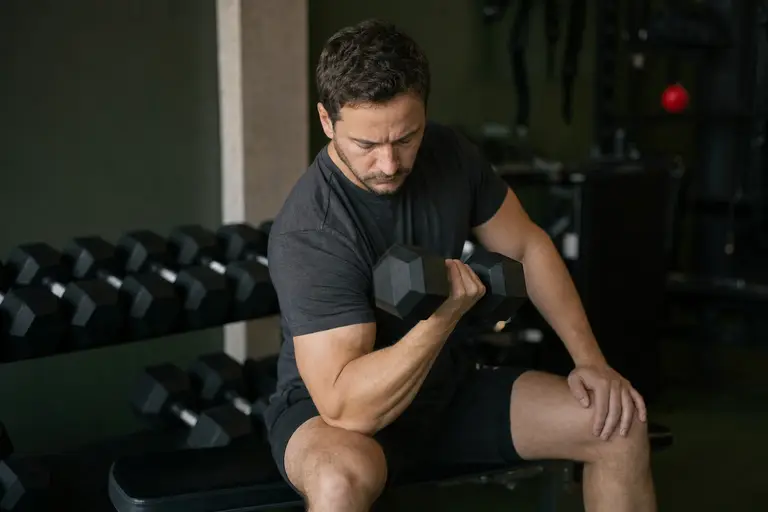
Sets and reps to build muscle
To build muscle, aim for about 10 or more hard sets per muscle group each week, spread over two or more sessions.
How much a barbell weighs
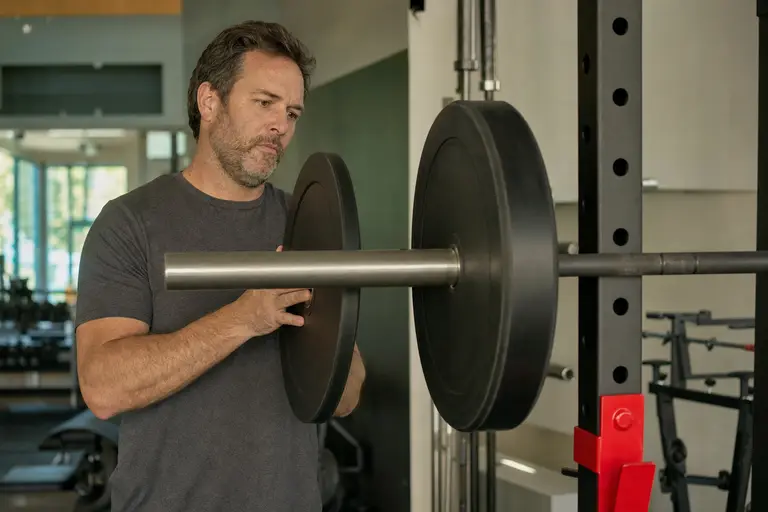
A standard Olympic barbell, the kind on most bench press and squat racks, weighs 20 kg (44 lb), and gyms that use pounds count it as 45 lb.
Personal trainer cost
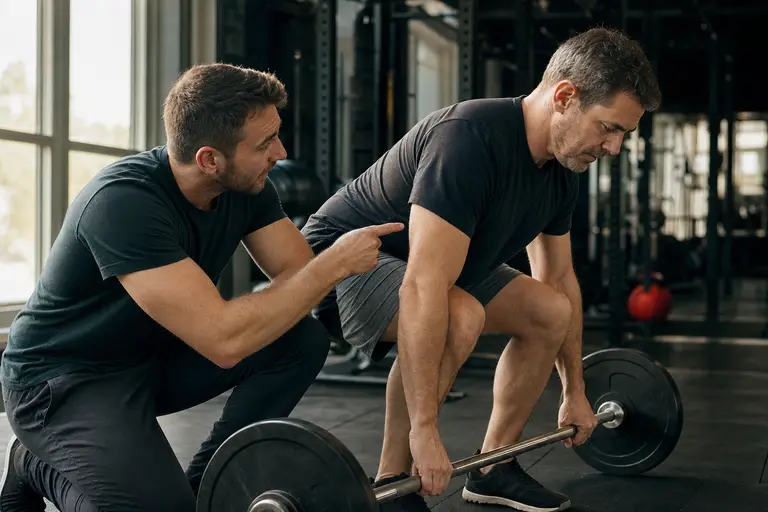
In the US, a one-hour session with a personal trainer usually costs about $40 to $100, and $100 to $200 or more with experienced trainers in big cities.
How much to lift as a beginner
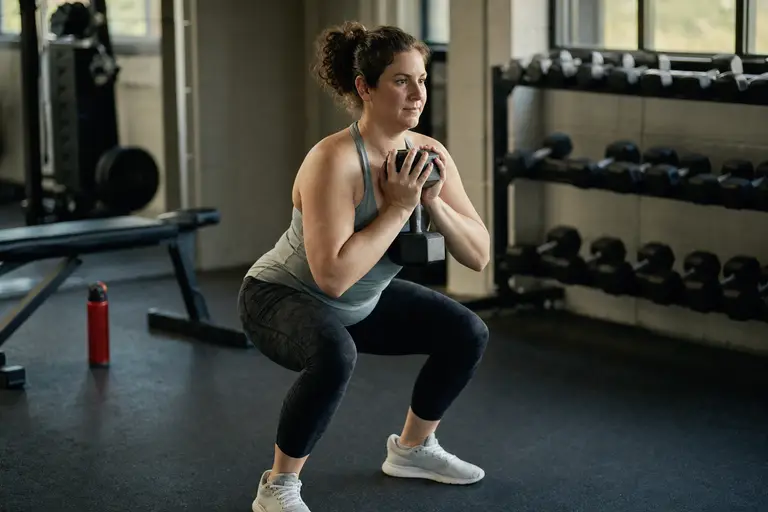
Start with a weight you can lift for 10 clean reps with 2 or 3 more left in the tank. For most beginners that means an empty barbell, or light dumbbells, on the big lifts.
Strength training over 50
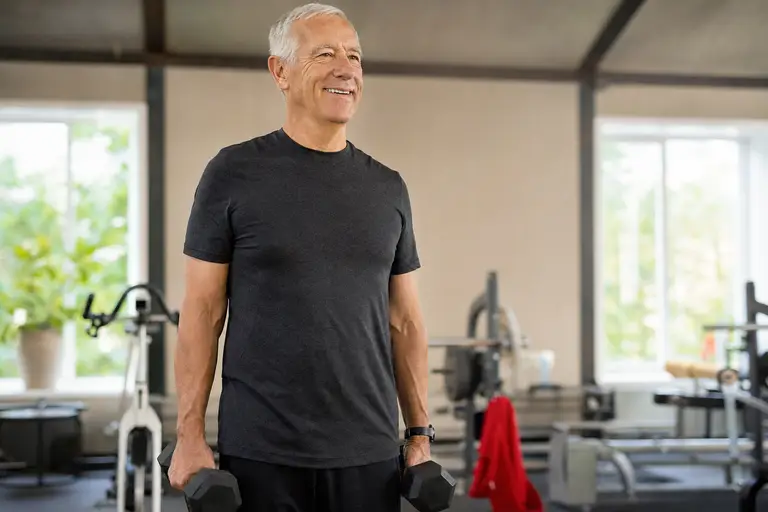
Start with two or three sessions a week of a handful of exercises that train your whole body, using a weight you can lift for about 8 to 12 controlled reps.
How to warm up before lifting
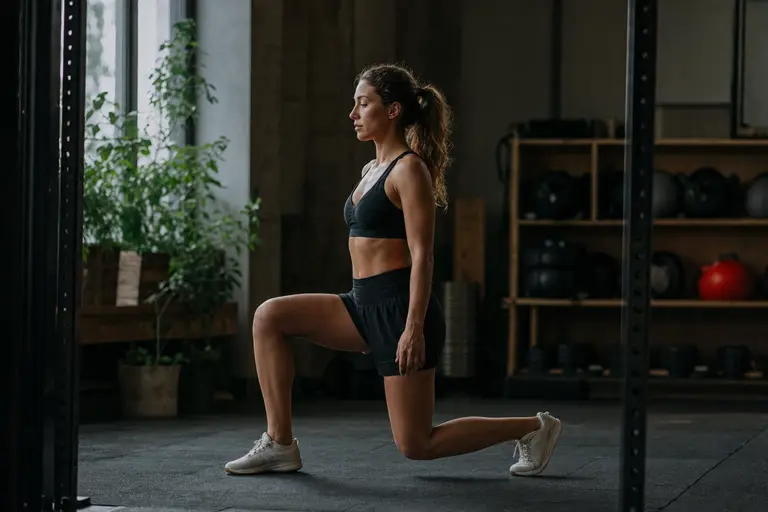
Do 5 minutes of easy cardio to raise your body temperature, then warm-up sets of your first exercise: start with the empty bar or a light weight and work up in a few jumps, doing fewer reps as the weight climbs.
Is Hevy free?
Yes. Hevy is free to use with no ads, and its help center lists the free limits: 4 routines, 7 custom exercises, 3 months of stats history, and two body measurements (read November 14, 2026).
Is the Strong app free?
Yes. Strong is free to use: its App Store listing says the free version saves unlimited workouts and allows up to 3 custom routines (read November 14, 2026).
Strength training for women
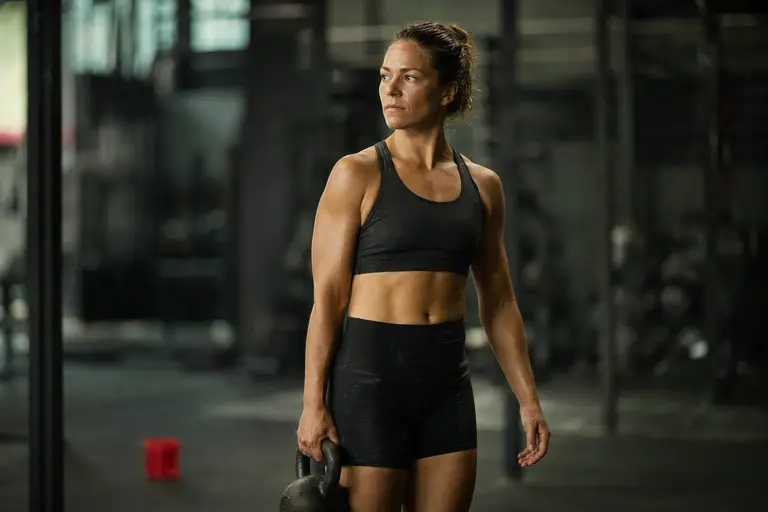
Mostly, yes. A 2020 meta-analysis found women and men gained muscle and lower-body strength at similar rates from the same training, and women gained relatively more upper-body strength.
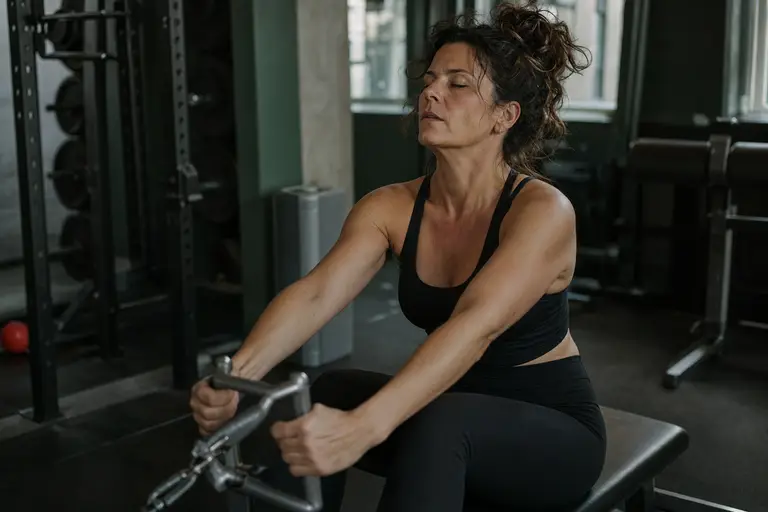
Myo-reps
Myo-reps are a rest-pause method: you do one longer set of 8 to 15 reps, stopping about 2 reps short of failure, then take 3 to 5 deep breaths and do short mini-sets of 3 to 5 reps with the same weight.
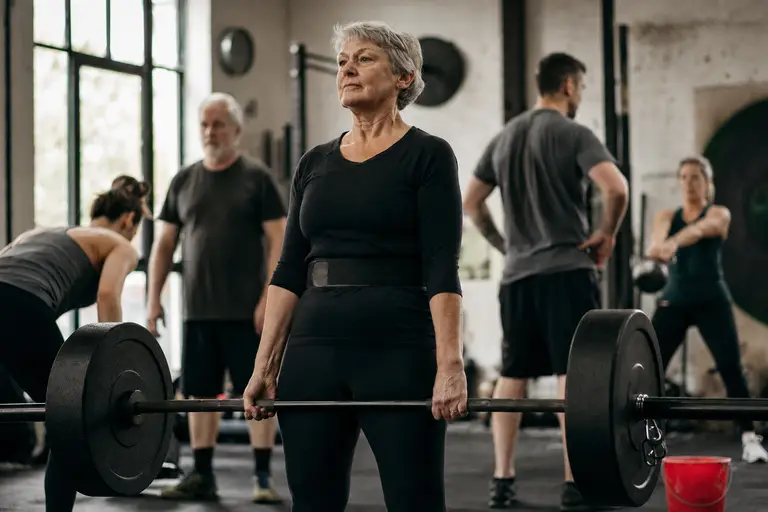
Strength standards
Strength standards compare your one-rep max to your body weight to give a rough level, from untrained to elite.
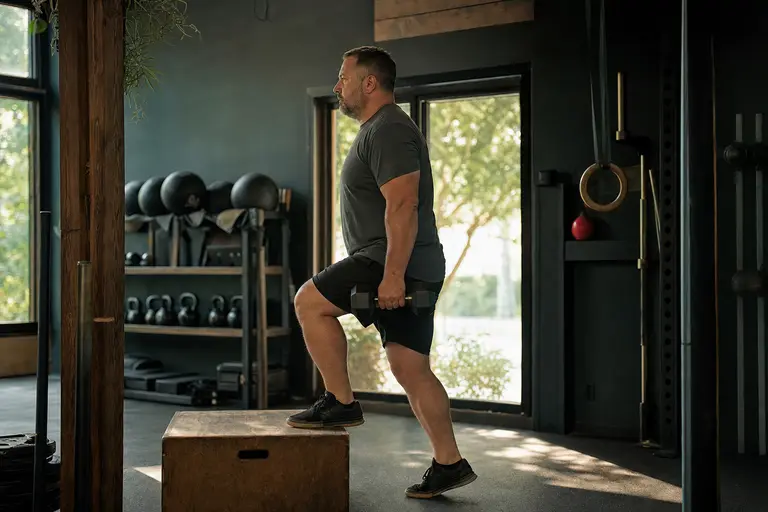
Best glute exercises
The best glute exercises are lifts that straighten your hips against a load: hip thrusts, squats, Romanian deadlifts and split squats.
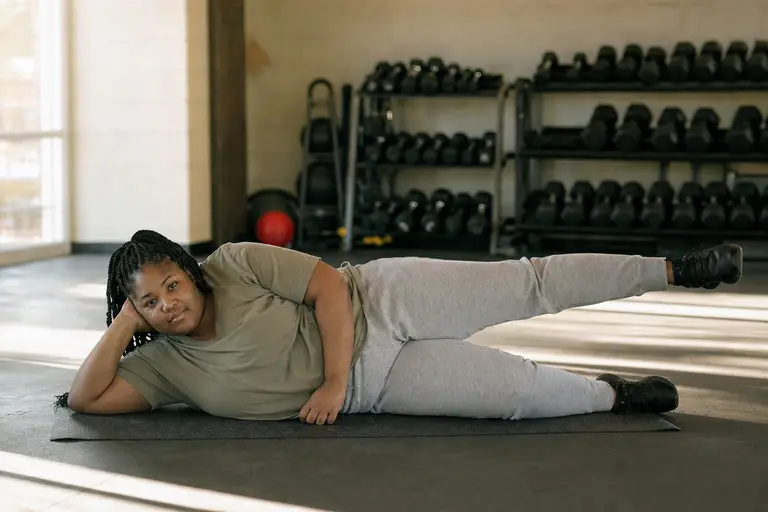
Gluteus medius exercises
The best gluteus medius exercises are side lying hip abduction, the side plank with hip abduction, single-leg squats and banded side steps.
Best workout apps
The best workout app is the one built for the training you actually do, whether that's lifting weights or following classes.
Gym etiquette for beginners
Gym etiquette comes down to four habits: put your weights back, wipe down what you touched, share equipment between sets, and give people space.
20-10 interval workout
A 20-10 interval workout is 20 seconds of all-out effort followed by 10 seconds of rest, repeated about 8 times, so one round takes 4 minutes.
Bro split
A bro split gives each muscle group its own day, usually over five days a week: chest, back, shoulders, legs and arms.
What is a drop set?
A drop set is a set where you lift until you're close to failure, then immediately lower the weight by about 20 to 30 percent and keep going with little or no rest, often for two or three drops.
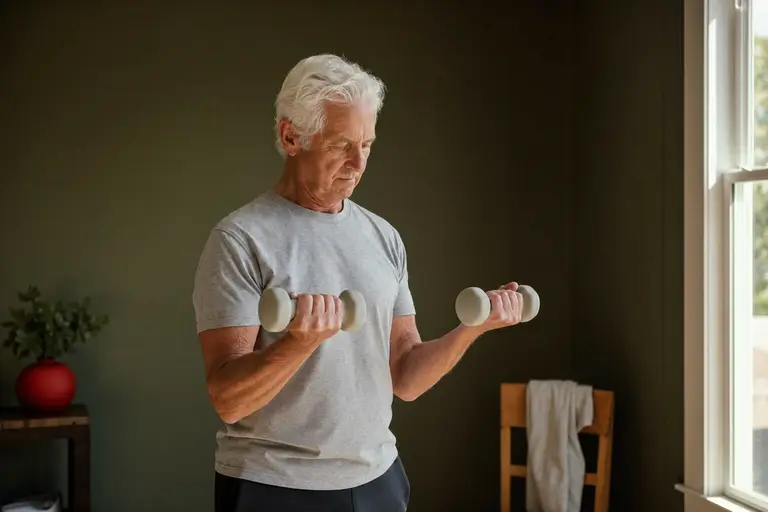
Dumbbell arm workout
A good dumbbell arm workout pairs a curl for your biceps with an extension for your triceps.
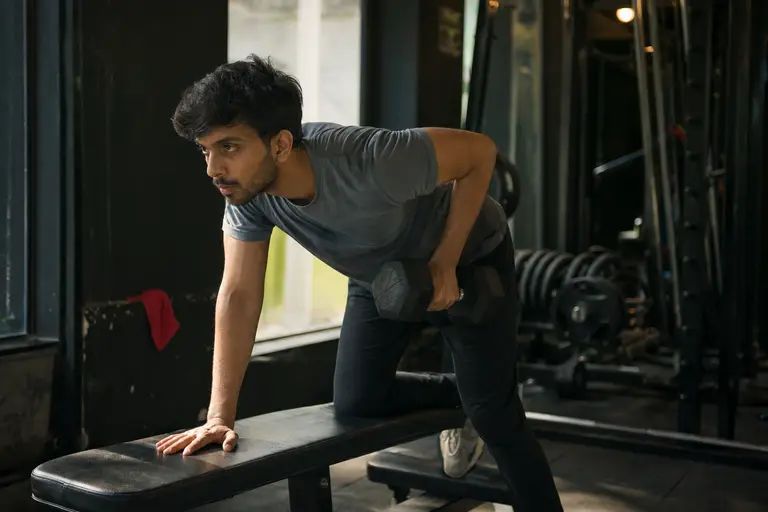
Dumbbell back workout
A good dumbbell back workout is built on rows: one-arm rows and chest-supported rows for 3 sets of 8 to 12, plus a pullover and a reverse fly.
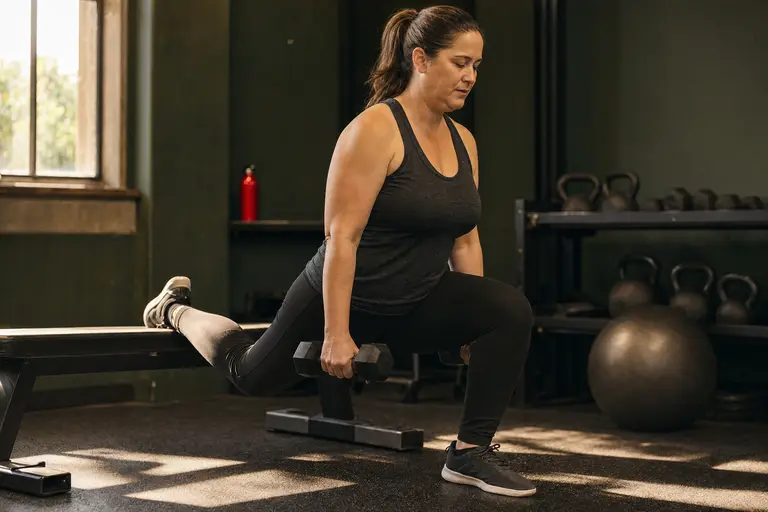
Dumbbell leg workout
A good dumbbell leg workout pairs a squat with a hip hinge: goblet squats and Romanian deadlifts, 3 sets of 8 to 12.
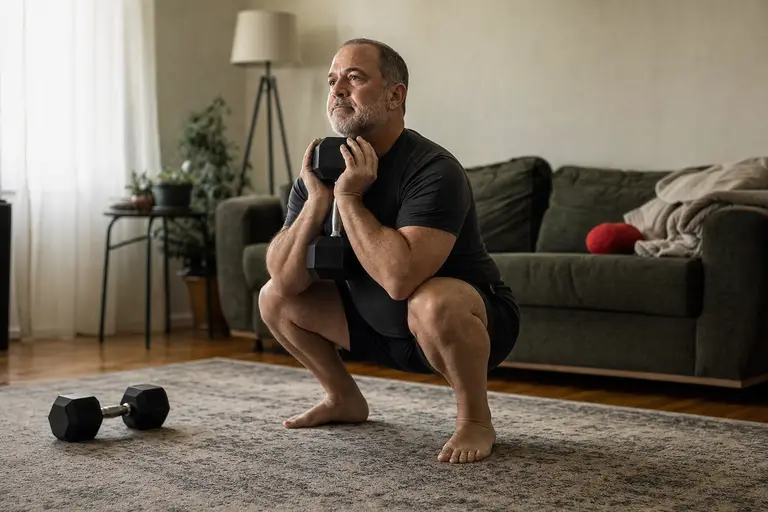
Full body dumbbell workout plan
A simple dumbbell workout plan is two full body workouts, A and B, done 3 days a week with a rest day between.
Glute workout
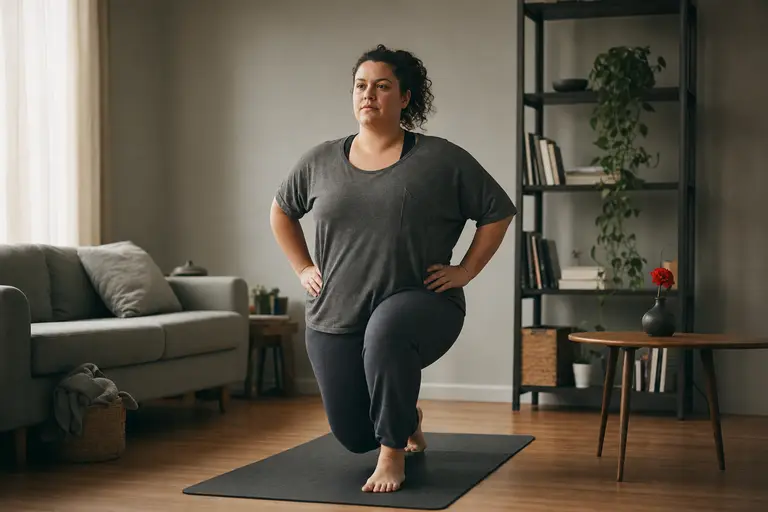
A good glute workout has four to six moves: a hip thrust or glute bridge, a squat or split squat, a hinge such as the Romanian deadlift, and a move that takes your leg out to the side.
GLP-1 workout plan
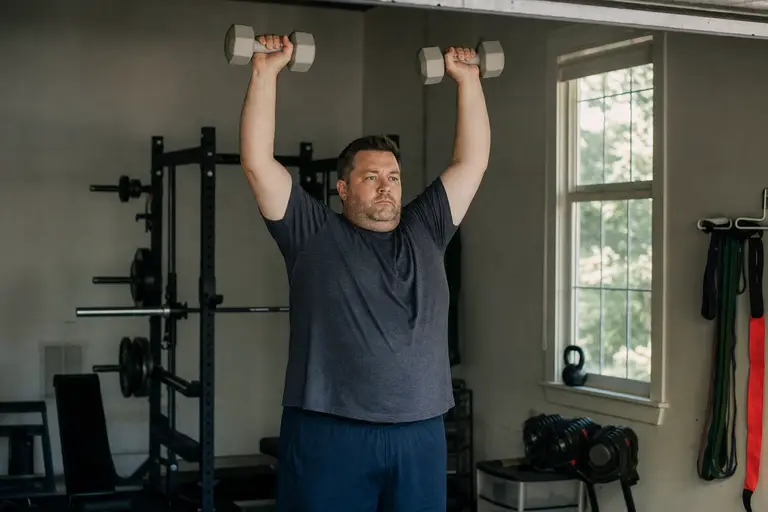
Lift weights three days a week and walk on most other days. A 2025 advisory from four nutrition and obesity societies recommends strength training at least 3 times a week plus at least 150 minutes of moderate aerobic activity, matched to your fitness.
What PR means in the gym
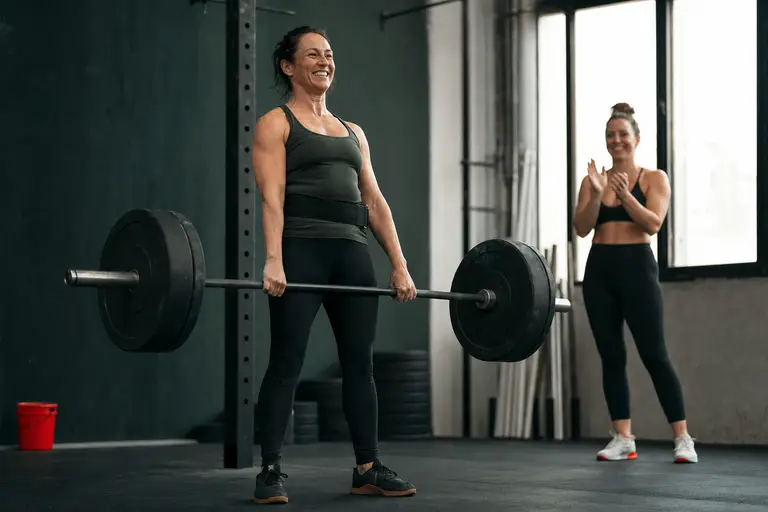
In the gym, PR stands for personal record: your best result ever on a lift or exercise, such as the heaviest weight you've squatted or the most push-ups you've done in one set.
Push pull legs split
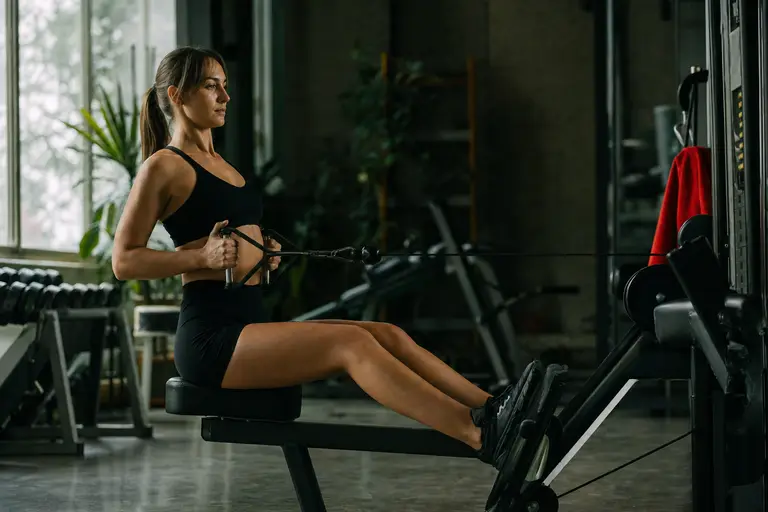
A push pull legs (PPL) split groups exercises by movement: push days train your chest and shoulders along with your triceps; pull days train back and biceps; leg days train quads, hamstrings, glutes and calves.
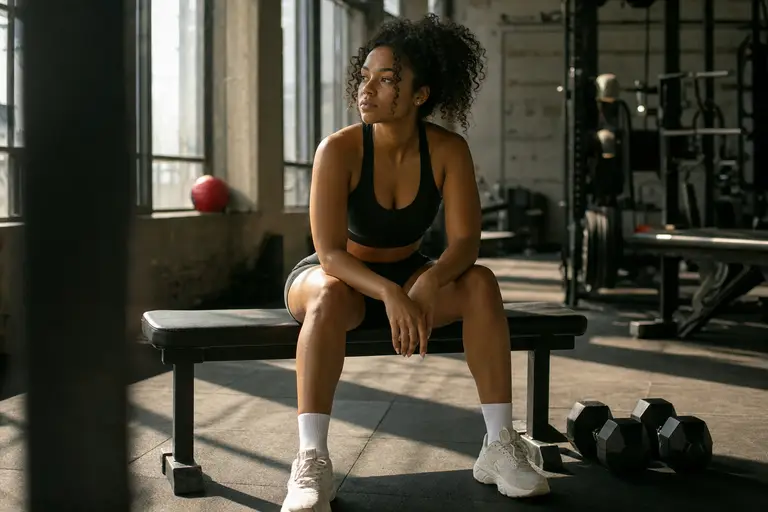
Workout split
A workout split is the way you spread your muscles across the training days in your week. The best workout split is the one that fits the days you can train: full body for 2 or 3 days, upper lower for 4, upper lower plus push pull legs for 5, and push pull legs twice through for 6.
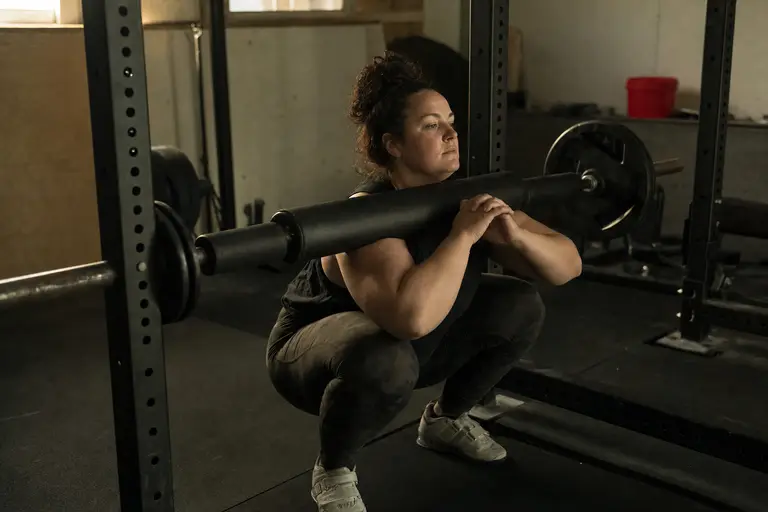
Zercher squat
A Zercher squat, named after 1930s lifter Ed Zercher, is a squat with the barbell held in the bend of your elbows.
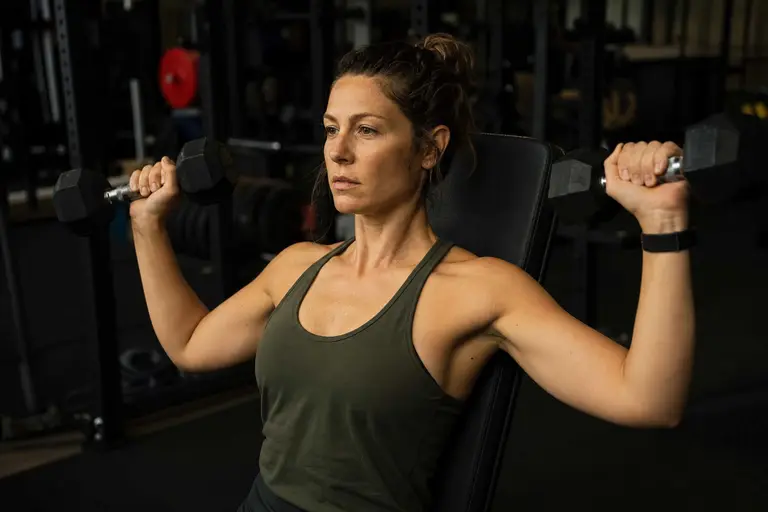
Upper lower split
An upper lower split alternates upper body days (chest, back, shoulders and arms) with lower body days (quads, hamstrings, glutes and calves).
German Volume Training
German Volume Training (GVT) is a muscle-building method built on 10 sets of 10 reps of one big lift per muscle group, with about 60% of your one-rep max and 60 to 90 seconds of rest between sets.
Greasing the groove
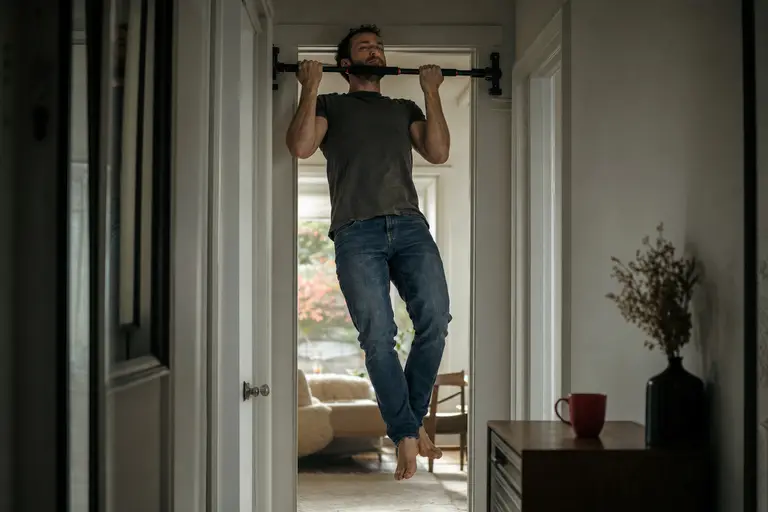
Greasing the groove means practicing one exercise many times a day with easy sets, about half of what you can do, and never going to failure.
Greyskull LP
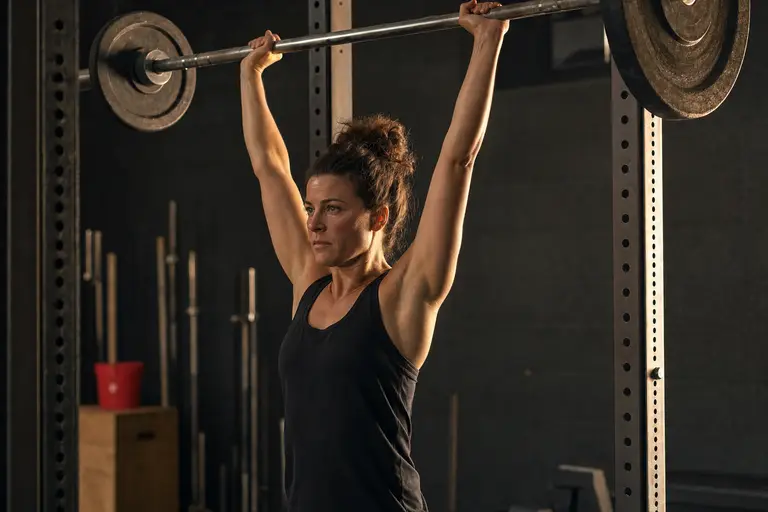
Greyskull LP is a beginner strength program by gym owner John Sheaffer, also known as Johnny Pain.
GZCLP for beginners
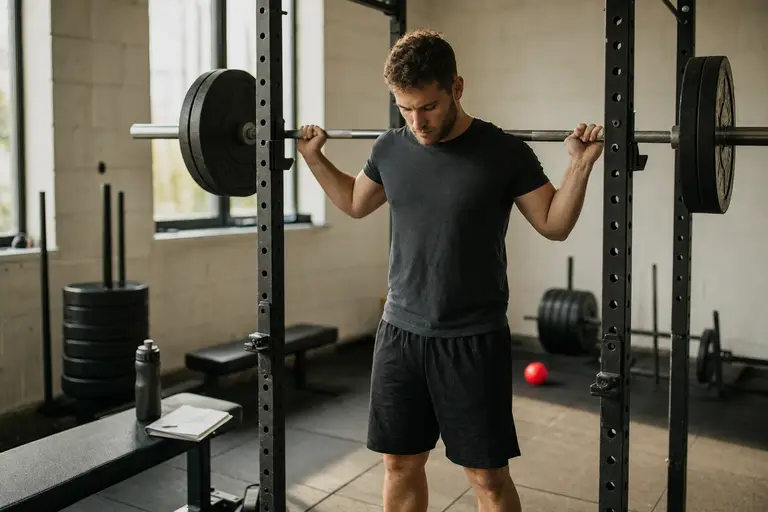
GZCLP is a beginner strength program by powerlifting coach Cody LeFever. You train 3 or 4 days a week, rotating through four workouts built on the squat, bench press, deadlift and overhead press.
Japanese walking
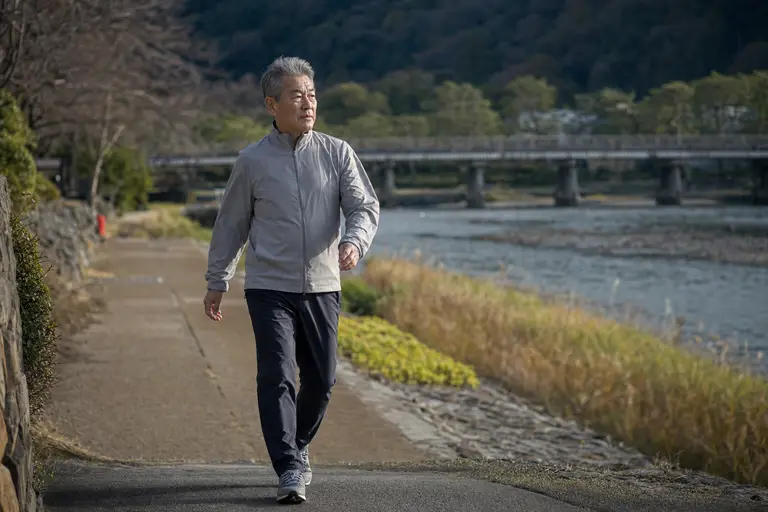
Japanese walking is interval walking training developed at Shinshu University in Japan: 3 minutes of fast walking, then 3 minutes of slow walking, repeated at least 5 times, on 4 or more days a week.
Madcow 5x5
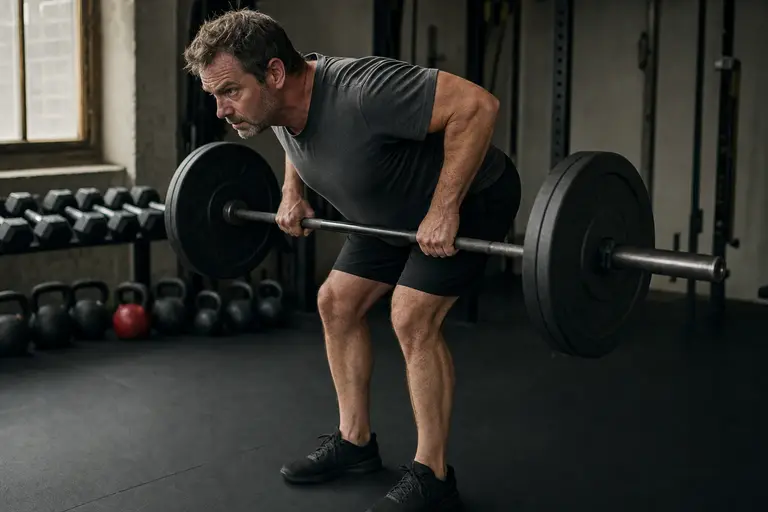
Madcow 5x5 is a 3-day-a-week strength program based on Bill Starr's 5x5, for lifters who can no longer add weight every session.
nSuns 5/3/1 LP
nSuns 5/3/1 LP is a high-volume strength program shared on Reddit in 2016 by a lifter known as nSuns.
Progressive overload
Progressive overload means gradually asking more of your muscles over time so they keep adapting, usually by adding weight or reps.
Rucking
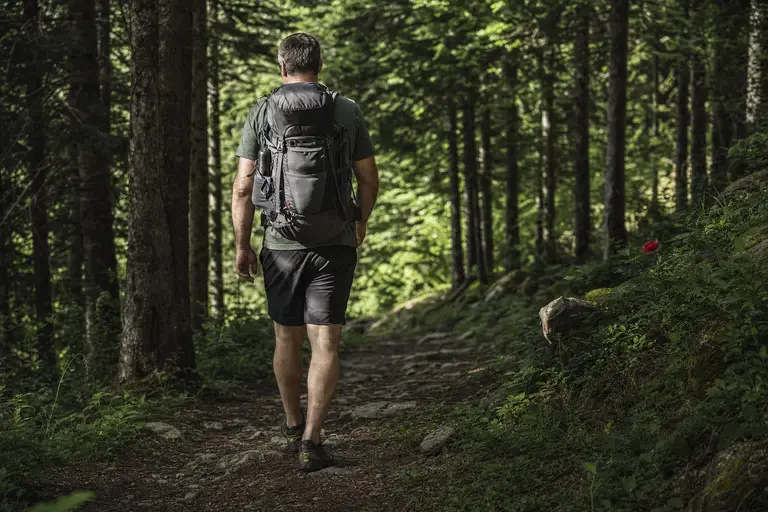
Rucking is walking with a weighted backpack. It started as military training, and it turns an ordinary walk into a harder workout for your legs and back without any running.
Smolov Jr
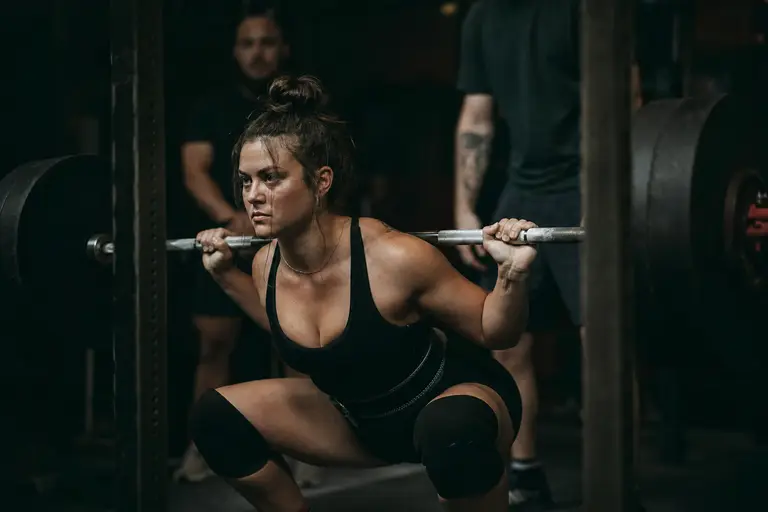
Smolov Jr is a hard 3-week block for one lift, usually the squat or the bench press. You train that lift 4 days a week at 70% to 85% of your one-rep max, then add 5 to 10 lb in week 2 and 10 to 20 lb in week 3.
Starting Strength program
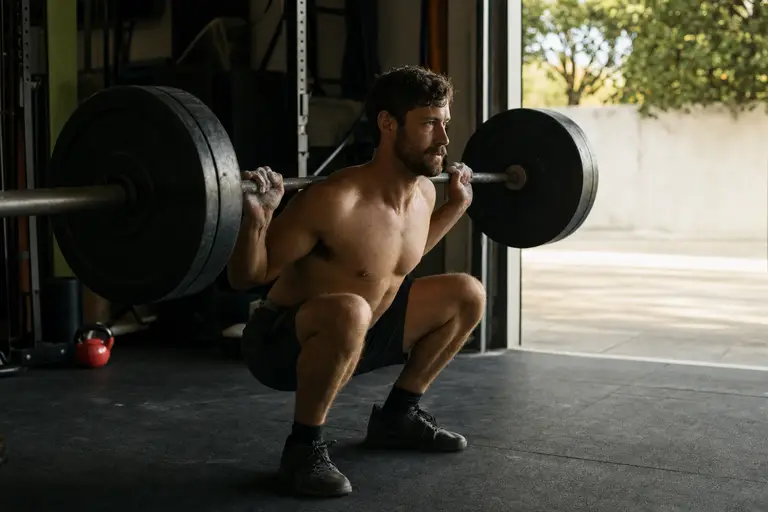
Starting Strength is a beginner barbell program by strength coach Mark Rippetoe. You train 3 days a week, alternating two full-body workouts.
StrongLifts 5x5
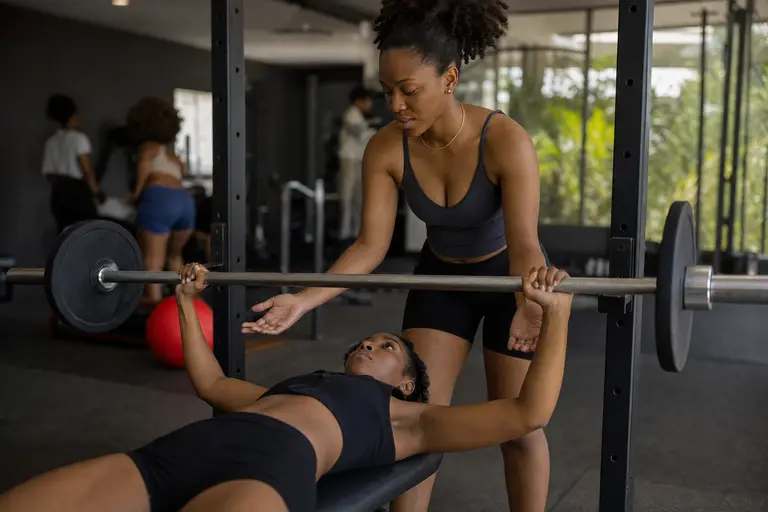
StrongLifts 5x5 is a beginner strength program by Mehdi, who runs StrongLifts.com. You train 3 days a week, alternating two full-body workouts.
12-3-30 workout
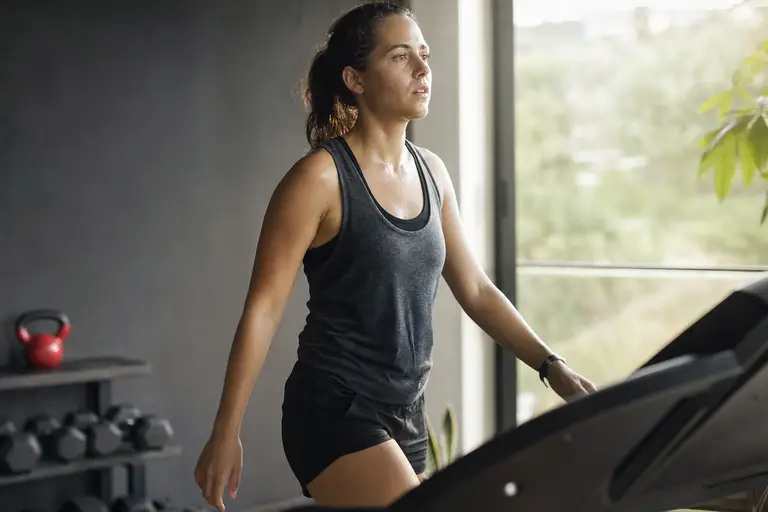
The 12-3-30 workout is a treadmill walk at a 12 percent incline and 3 miles per hour for 30 minutes.
75 Hard challenge
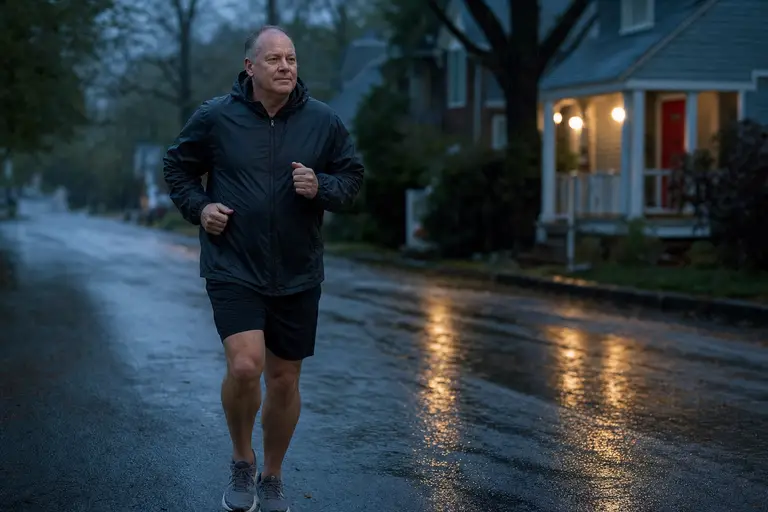
75 Hard is a 75-day program created by Andy Frisella, who calls it a mental toughness program rather than a fitness challenge.
75 Soft challenge
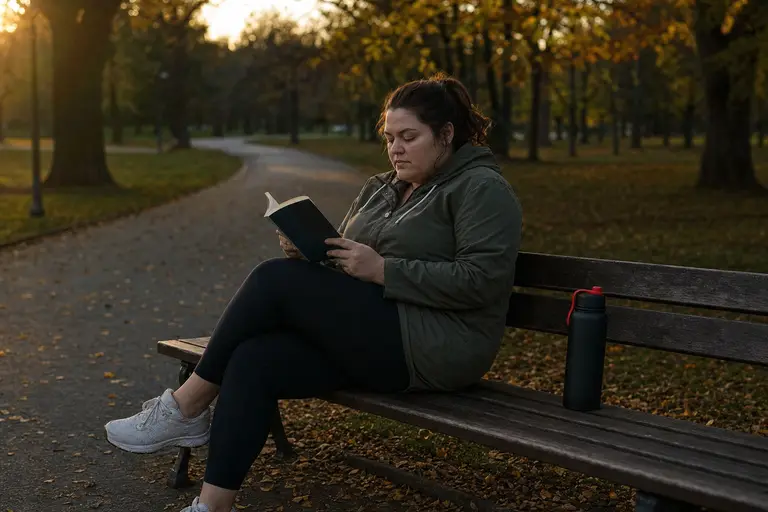
75 Soft is a 75-day habit challenge and a gentler take on 75 Hard. The most shared version has four daily rules: eat well and drink alcohol only on social occasions, move for 45 minutes with one active recovery day a week, drink 3 liters of water, and read 10 pages of a book.
Arnold split
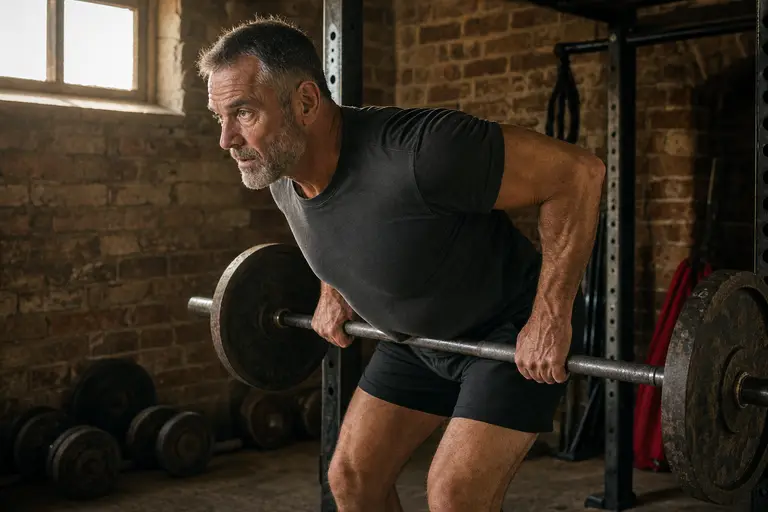
The Arnold split is a six-day bodybuilding routine that pairs chest with back and shoulders with arms, and gives legs a day of their own.
3 day workout split
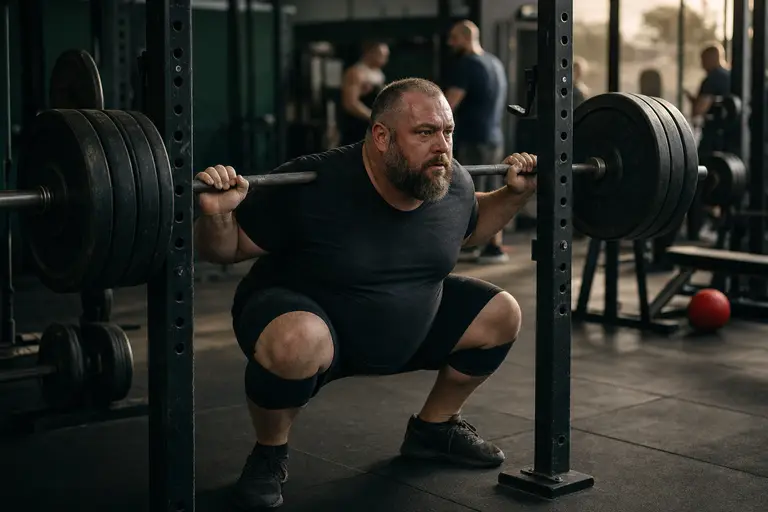
For most people, the best 3 day workout split is full body three times a week, with a rest day after each session, such as Monday, Wednesday and Friday.
4 day workout split
The most popular 4 day workout split is upper lower: two upper body days and two lower body days, such as Monday, Tuesday, Thursday and Friday.
5 day workout split
A good 5 day workout split is upper, lower, push, pull and legs: an upper lower pair early in the week, then a push pull legs round, with rest on Wednesday and Sunday.
Dumbbell chest workout
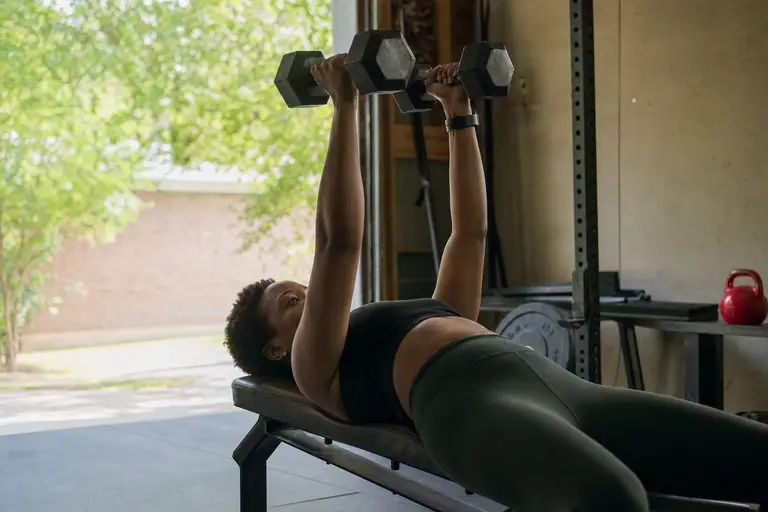
A good dumbbell chest workout starts with a flat press and an incline press, then adds a fly or push-ups.
The GZCL method
The GZCL method is a way of organizing strength training into three tiers, created by powerlifter and coach Cody LeFever, who posts as GZCL.
PHUL workout
PHUL (Power Hypertrophy Upper Lower) is a four-day program by Brandon Campbell, published on Muscle & Strength.
Reddit PPL
The Reddit PPL is a free six-day beginner program posted on r/Fitness by u/Metallicadpa. You train each muscle group twice a week in pull-push-legs order, with one rest day.
RPE scale explained
RPE (rating of perceived exertion) rates how hard a set was from 1 to 10, based on how many more reps you could have done.
Texas Method
The Texas Method is a 3-day-a-week strength program for lifters who can no longer add weight every session.
Wendler 5/3/1
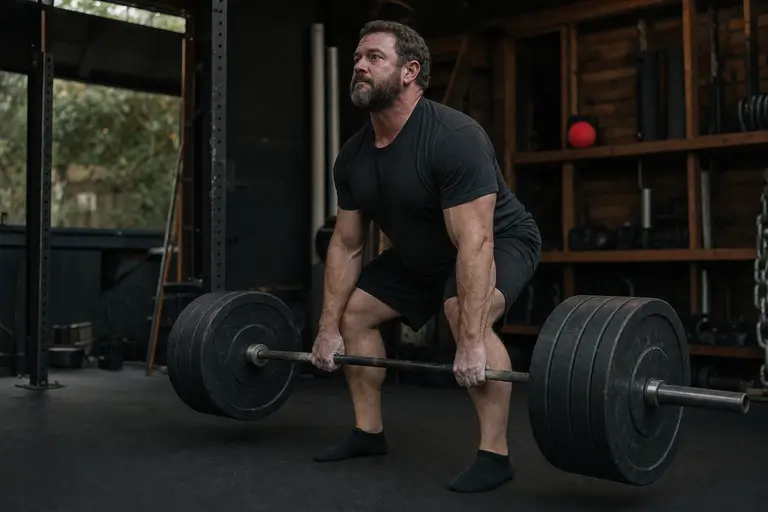
5/3/1 is a strength program by Jim Wendler built on four lifts: the squat, bench press, deadlift and overhead press.
Your first day at the gym
Your first day is mostly a check-in and a look around, followed by an easy workout of about 30 minutes.
What to wear to the gym
Wear clothes you can move and sweat in: a breathable top, shorts or leggings you can squat in, athletic socks and closed-toe shoes.
Full body workout for beginners
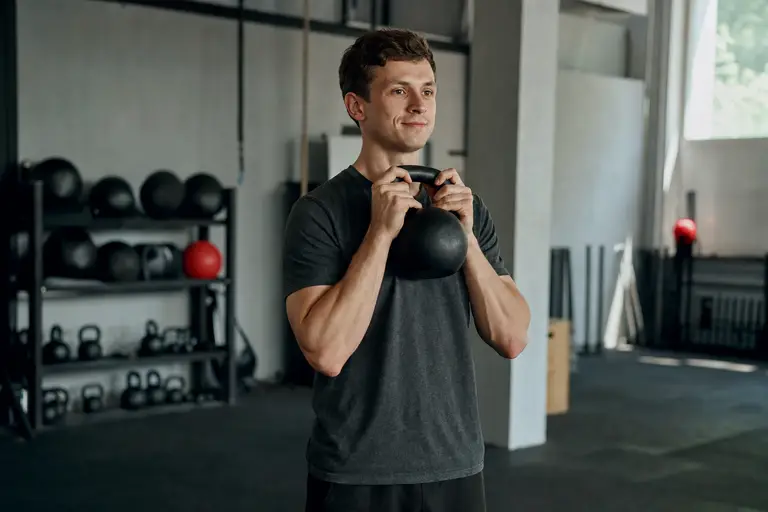
A good beginner full body workout trains every major muscle group in one session, two or three days a week, with a rest day between.
How to track workouts
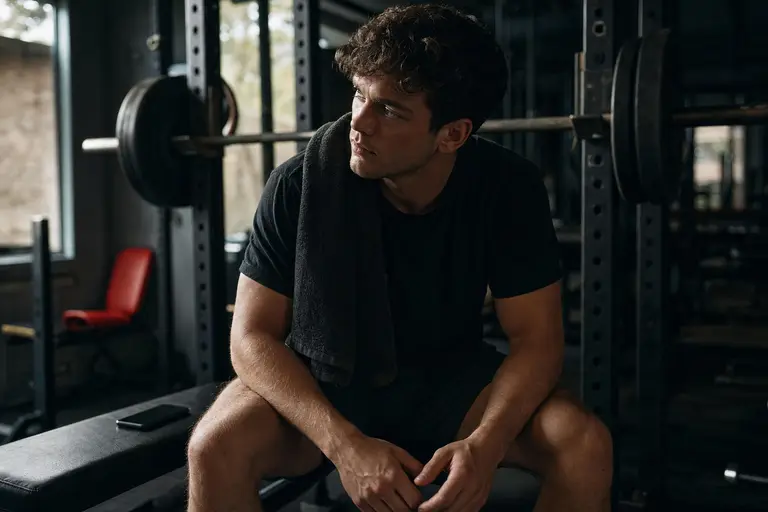
Write down the date, each exercise, and the weight and reps of every set, plus how hard it felt.
Running and cardio
Getting started, building up and staying with it.
First marathon training plan
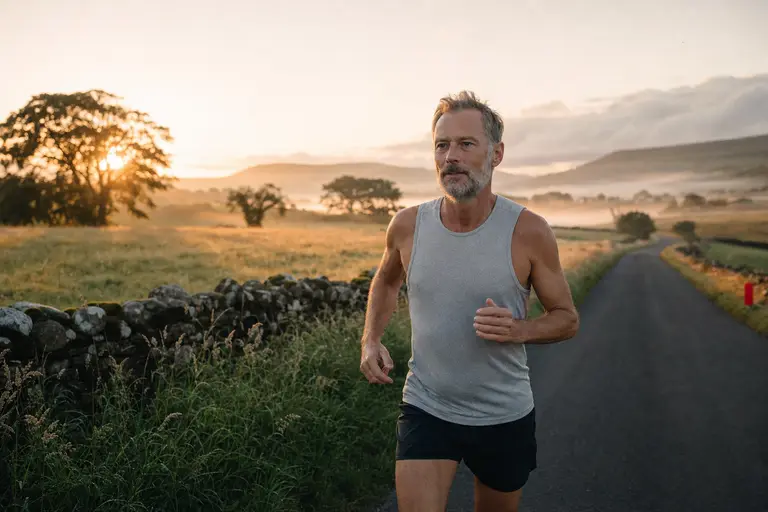
To map out training for your first marathon, give yourself 18 to 20 weeks and start from a base of about 15 to 18 miles (24 to 29 km) a week with a long run of 8 miles (13 km).
How to start running
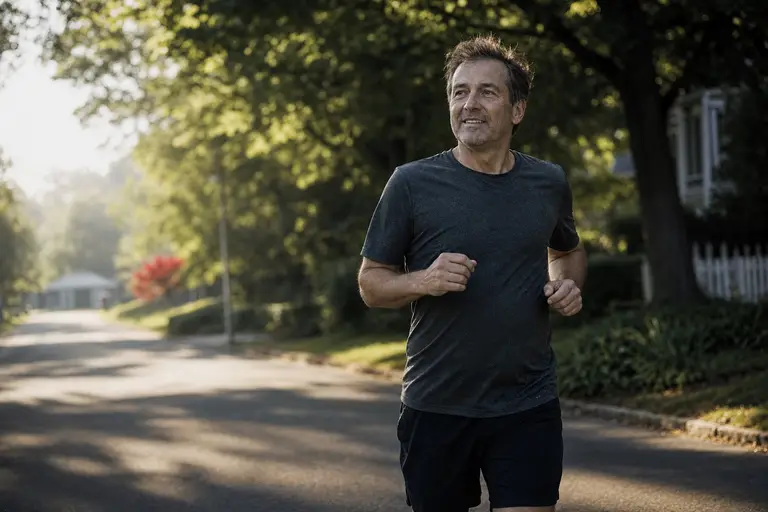
Start with run-walk intervals three times a week: for example, 1 minute of easy running and 90 seconds of walking, repeated for 20 to 30 minutes.
How long to run a mile
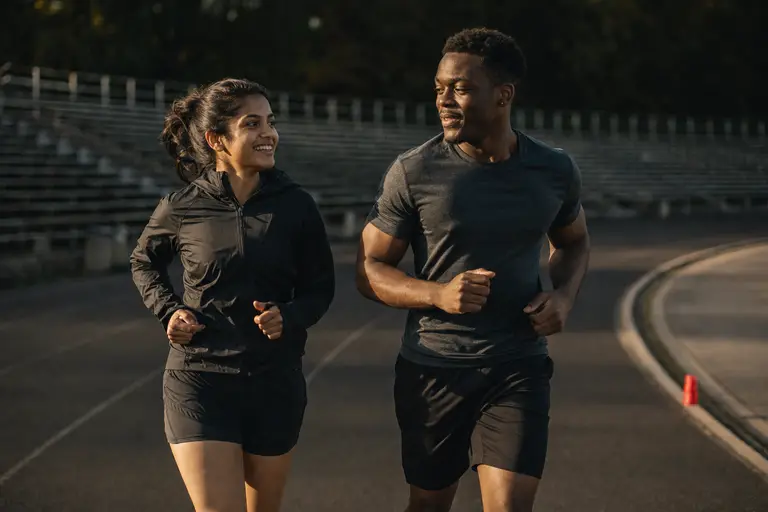
A typical recreational runner takes about 9 to 10 minutes to run a mile. In a survey of more than 45,000 people at weekly 5k runs, the middle runner averaged 29 minutes 20 seconds, which is about 9 minutes 26 seconds per mile.
How many steps a day
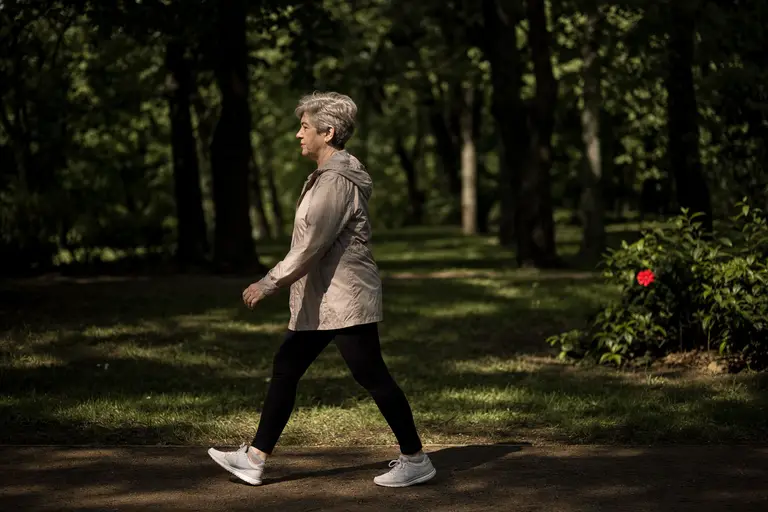
You don't need exactly 10,000. A 2022 analysis of 15 studies found the risk of early death kept falling as daily steps rose, then leveled off around 6,000 to 8,000 steps a day for adults 60 and older and around 8,000 to 10,000 for younger adults.
HIIT for beginners
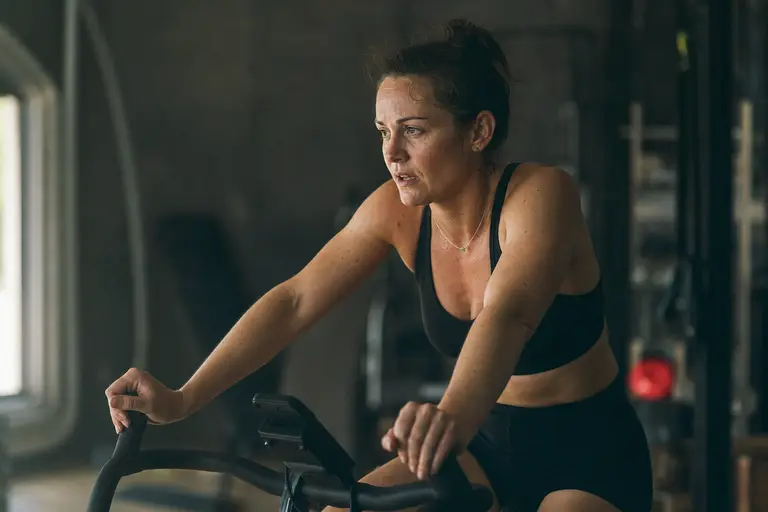
Start with one or two sessions a week of short, hard intervals followed by easy recovery, for example 30 seconds hard and 90 seconds easy, repeated 6 to 8 times on a bike or while walking uphill.
Best running apps
The best running app depends on what you want from it, whether that's a plan for a race or a community to run with.
5k training plan
A good beginner 5k training plan mixes running and walking three times a week for about 9 weeks.
Half marathon training plan
A beginner half marathon training plan takes about 12 weeks if you can already run 5 miles (8 km).
Zone 2 cardio
Zone 2 cardio is steady, easy aerobic exercise at a pace where you can still hold a conversation, usually about 60 to 70 percent of your maximum heart rate.
Food and nutrition
Protein, calories and macros without the busywork.
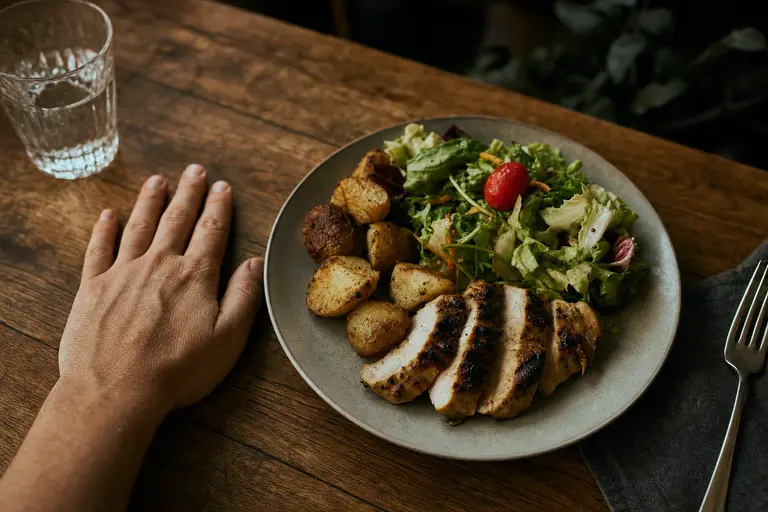
Count calories without a scale
Yes. Use labels whenever there is one, measure a few common foods once with cups or a scale to learn what a portion looks like, then estimate by eye after that.
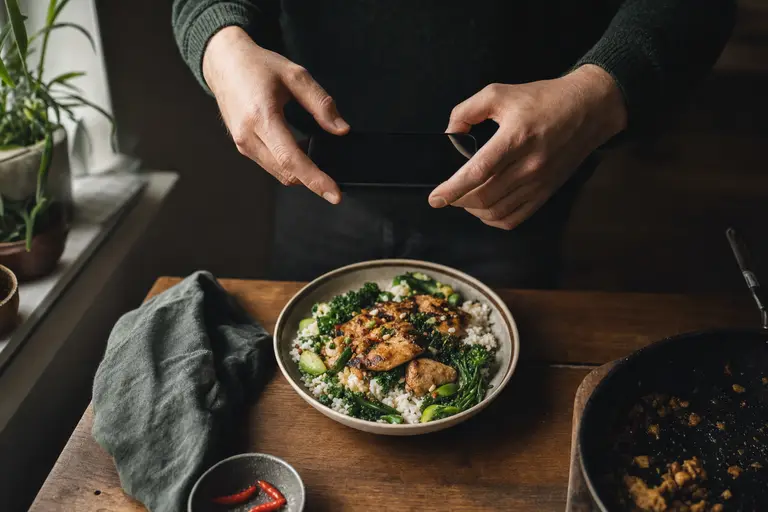
Track calories with a photo
Yes, roughly. In recent studies, AI models estimated a meal's calories from a photo alone with an average error of about 30 to 36%, close to how far off people usually are when they write down what they ate.
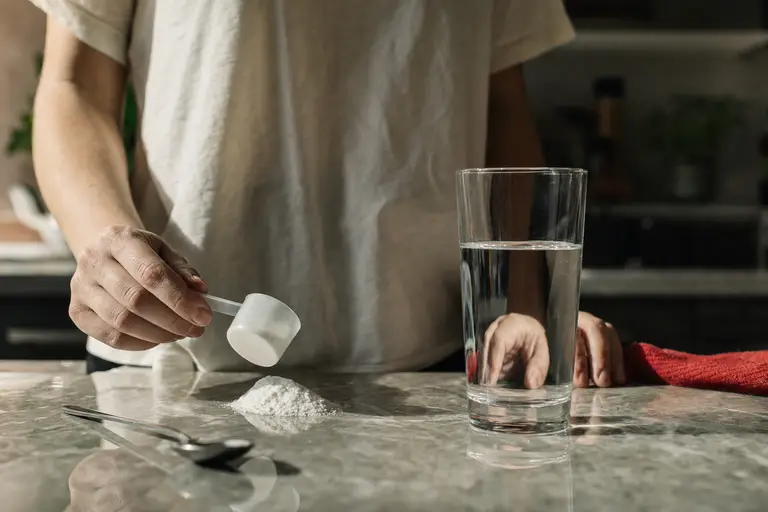
Creatine
Creatine monohydrate is one of the most researched supplements. The International Society of Sports Nutrition calls it the most effective supplement for increasing high-intensity exercise capacity and muscle mass during training.
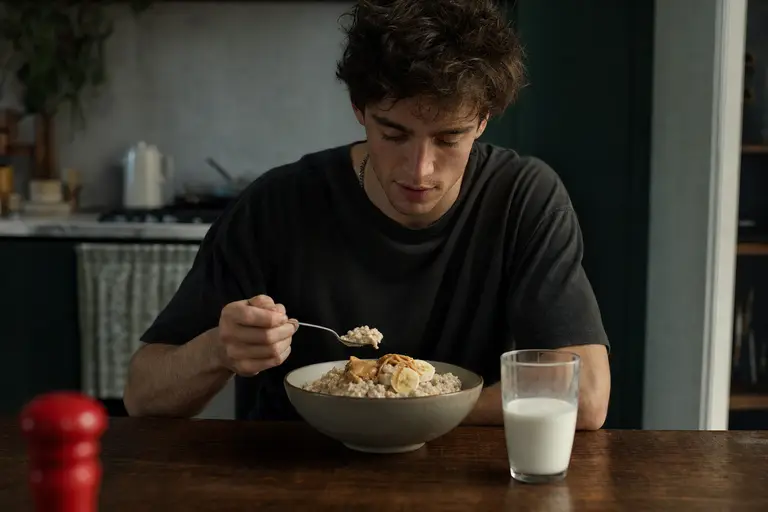
Lean bulk
Eat about 10 to 20 percent above your maintenance calories and aim to gain roughly 0.25 to 0.5 percent of your body weight a week, which is the range a review of bodybuilding nutrition recommends for beginners and intermediates.
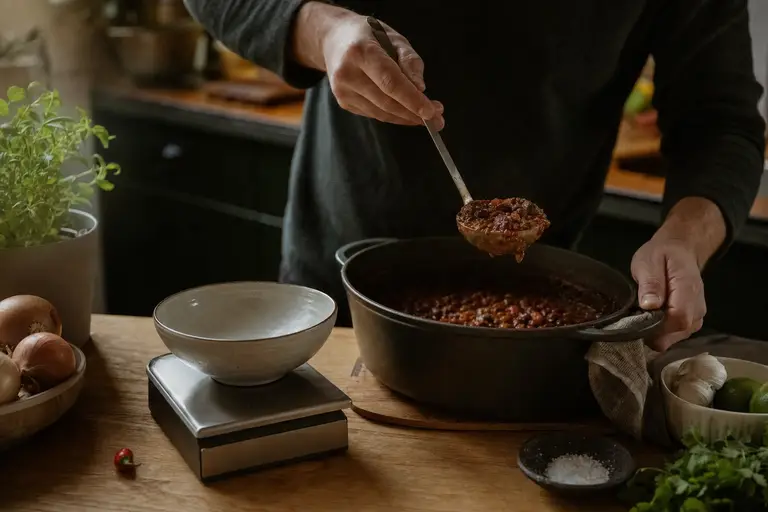
Calories in homemade food
Add up the calories of every ingredient, using the label or USDA FoodData Central, then divide by how much of the dish you eat.
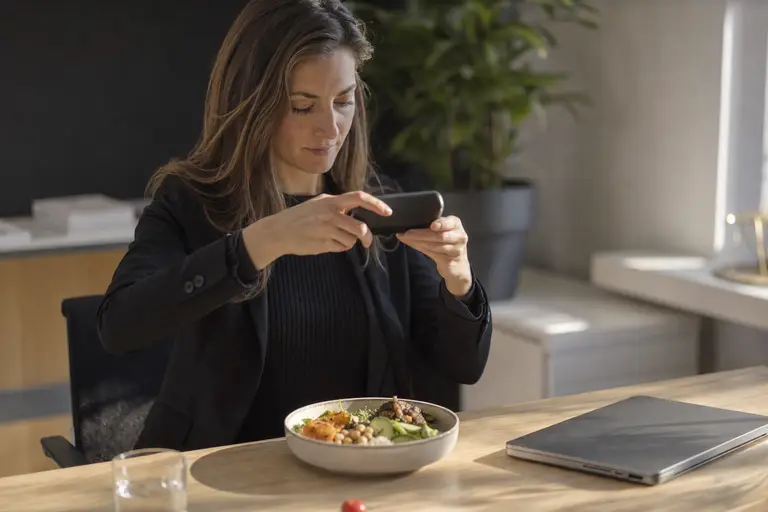
Choose a calorie tracking app
Pick the app you'll actually log in every day. That usually means the fastest way to log the food you eat most, whether that's typing a sentence or snapping a photo.
How to cut
Eat in a moderate deficit so you lose about 0.5 to 1 percent of your body weight a week. Keep protein high and keep lifting with the same intensity.
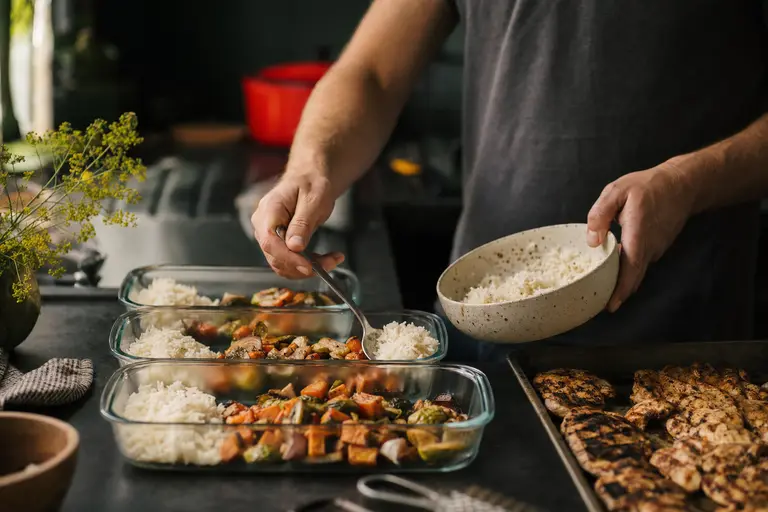
How to meal prep
Pick two or three meals you like and cook them in batches once or twice a week, then pack them into portions you can grab.

Track calories with AI
Tell an AI what you ate, or send it a photo of your plate or the nutrition label, and it works out the calories and macros for you.
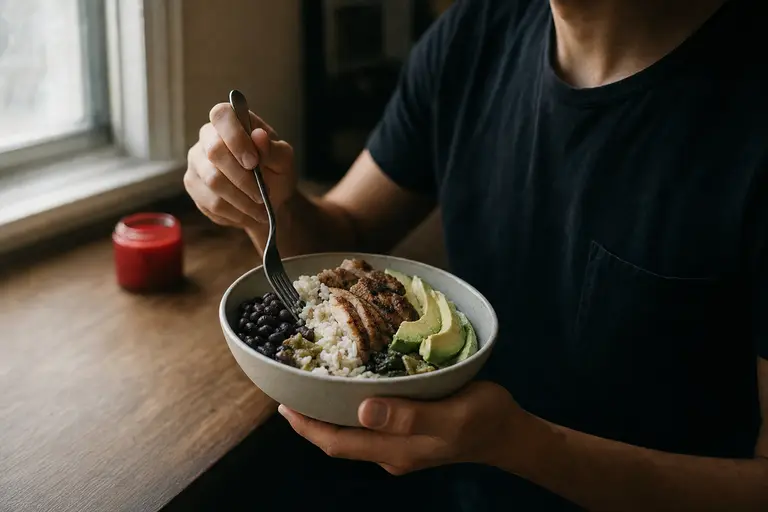
How to track macros
Tracking macros means counting the grams of protein, carbs and fat you eat each day against a target.

How to read a nutrition label
Start with the serving size and servings per container, because every number below them is for one serving.

Calories to lose weight
Start about 10 to 20 percent below your maintenance calories (your TDEE), which for many people means 300 to 500 fewer calories a day.
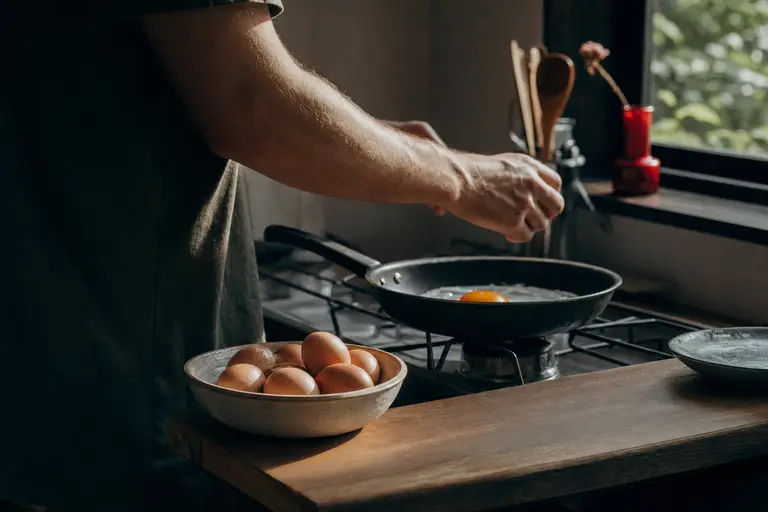
Protein in an egg
A large egg (about 50 grams) has about 6 grams of protein and about 70 to 75 calories. The white has a little over half of the protein, about 3.5 grams, and the yolk has about 2.5 to 3 grams, along with most of the fat.
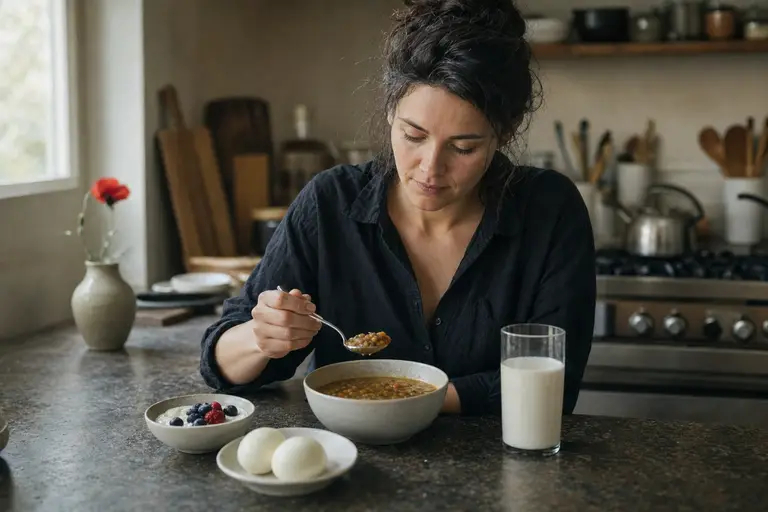
Protein on a GLP-1 medicine
A 2025 advisory from four nutrition and obesity societies gives two targets for people on GLP-1 medicines: a flat 80 to 120 grams of protein a day, or 1.2 to 1.6 grams per kilogram of body weight during active weight loss.
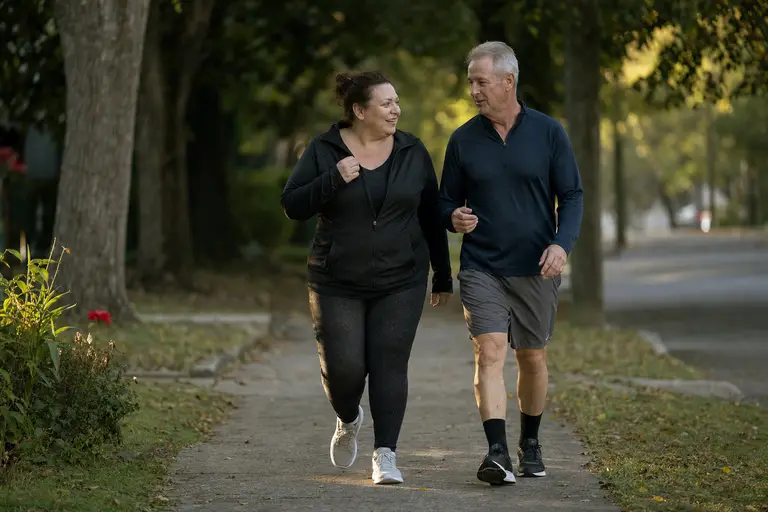
Weight you can lose in a month
A safe, steady pace is about 1 to 2 pounds (0.5 to 1 kg) a week, which works out to roughly 4 to 8 pounds, or 2 to 4 kg, in a month.
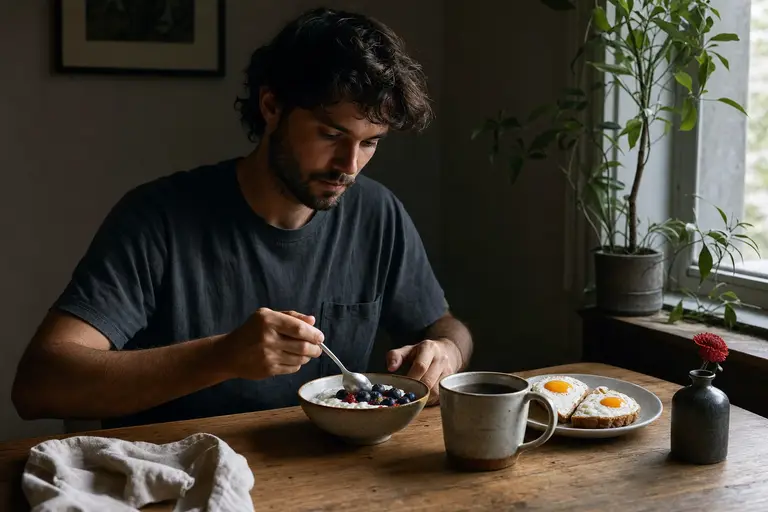
High-protein breakfast ideas
Good high-protein breakfasts give you about 25 to 40 grams of protein: for example, Greek yogurt with berries and nuts, eggs with cottage cheese on toast, a tofu scramble, or overnight oats made with milk and protein powder.

Best calorie tracking apps
The best calorie tracking app depends on how you like to log your food, and on whether you care most about speed or detail.
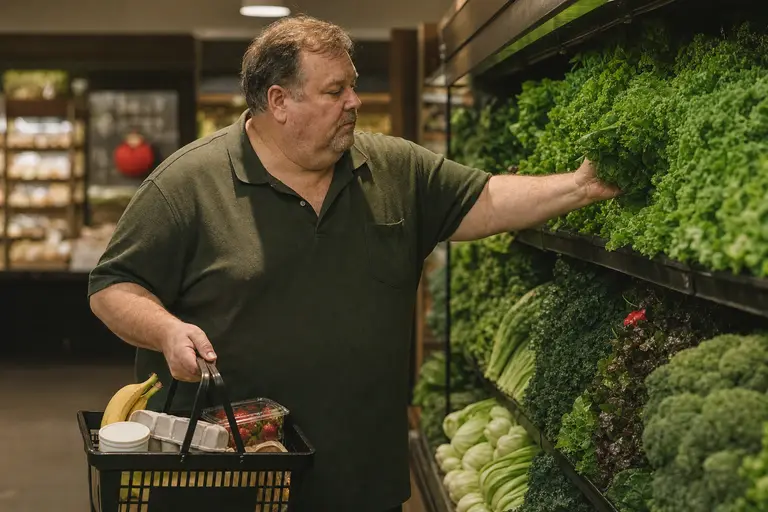
GLP-1 foods to avoid
No food is banned on semaglutide or tirzepatide. A 2025 advisory from four nutrition and obesity societies says to keep sugary drinks, sweets, fast food and processed meats low, and to skip large meals.
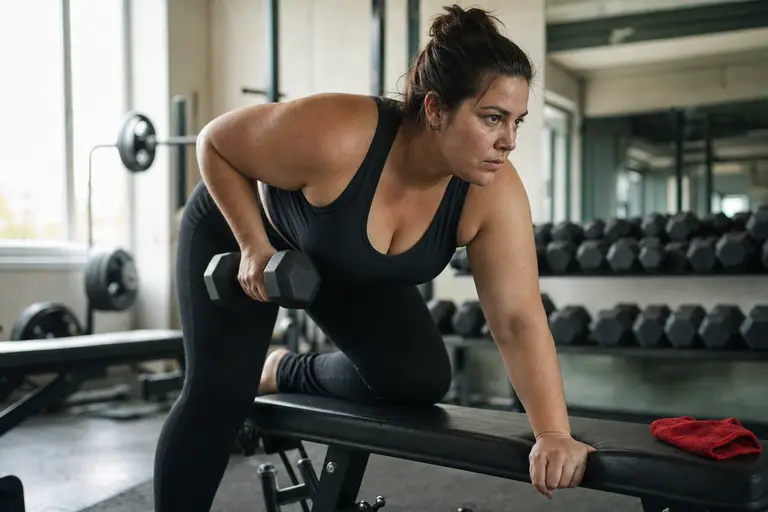
Body recomposition
Body recomposition means losing fat and gaining muscle at the same time, so your shape changes while the scale may barely move.
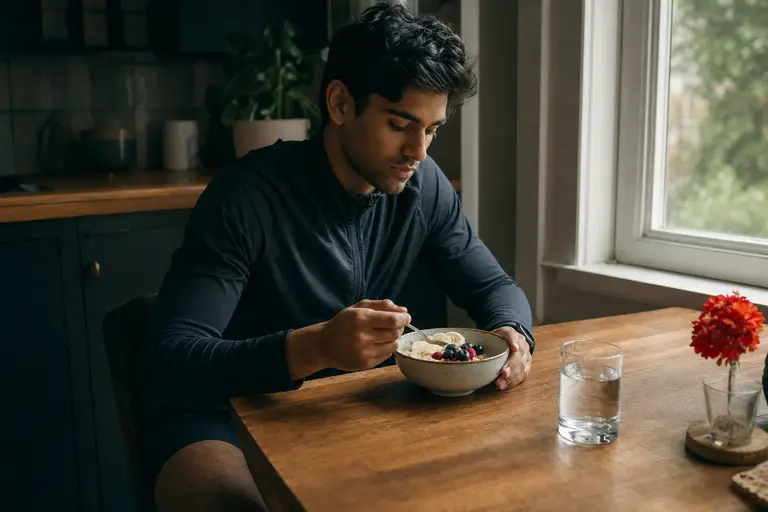
Carb cycling
Carb cycling means eating more carbs on hard training days and fewer on easy or rest days.
Reverse dieting
Reverse dieting means raising your calories slowly, in small steps, after a diet ends, instead of jumping straight back to how you ate before.
Macros for weight loss
Set calories first, about 10 to 20 percent below maintenance, because calories drive weight loss.
GLP-1 diet plan
Eat small meals every 3 to 4 hours and eat the protein on your plate first. Build the rest from fruits, vegetables, whole grains and dairy, and drink fluids through the day.
Best time to weigh yourself
The best time to weigh yourself is first thing in the morning, after you use the bathroom and before you eat or drink anything.
Weight loss plateau
Weight loss slows because a smaller body burns fewer calories, and your body also adapts by spending a bit less energy, so the deficit that worked at first shrinks.
Weight regain after GLP-1
Most people regain a good part of it. In a study of semaglutide, people regained about two-thirds of the weight they had lost within a year of stopping.
Yoga and mobility
Getting started, basic poses and fitting it around other training.
Recovery
Rest, deloads and the days between workouts.
TrainRec with Oura
Yes. Turn on Apple Health or Health Connect sharing in the Oura app, and sync TrainRec with the same one.
Foam rolling
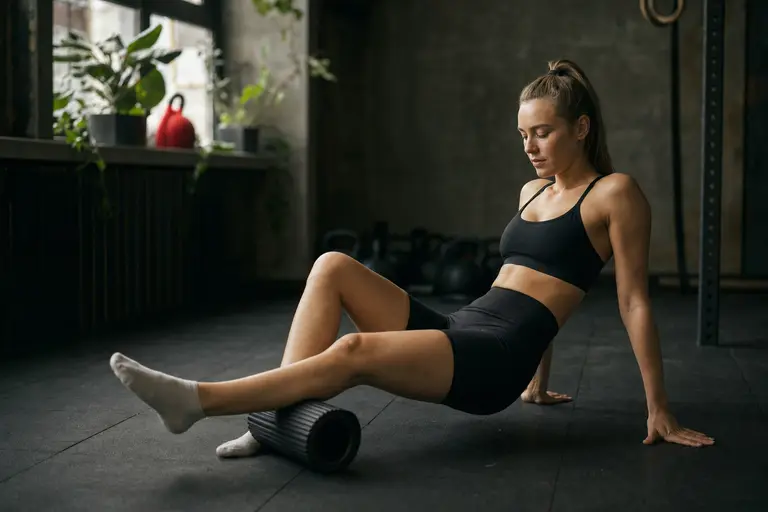
A little. A 2019 meta-analysis of 21 studies found foam rolling slightly improved flexibility and short sprints when used before exercise, and slightly reduced muscle soreness afterward.
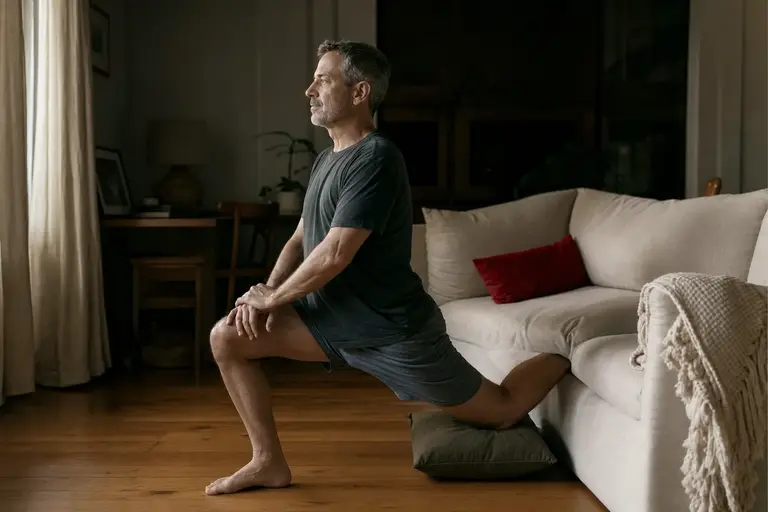
Couch stretch
Kneel with your back to a couch or wall, with one shin resting up against it and your other foot forward in a lunge.
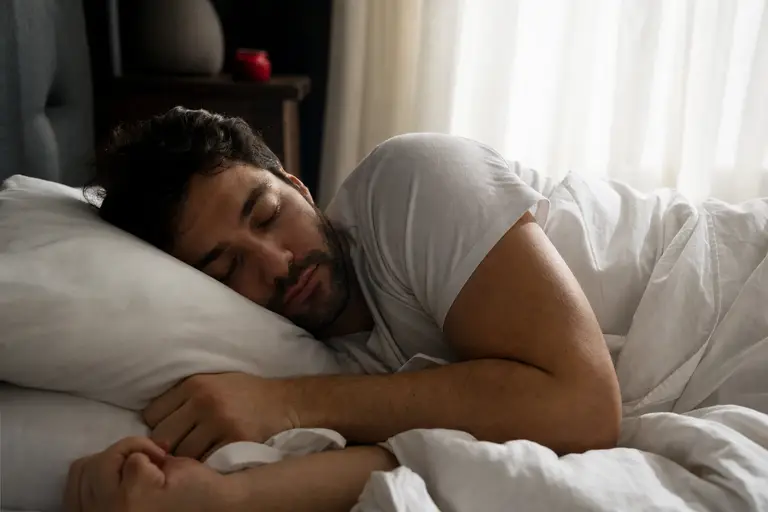
Sleep and muscle recovery
A lot. Adults need at least 7 hours a night, according to sleep medicine experts. In one study, a single night without sleep cut muscle protein building by 18 percent in young adults, and a review found several short nights in a row can lower strength on big lifts like squats and bench press.
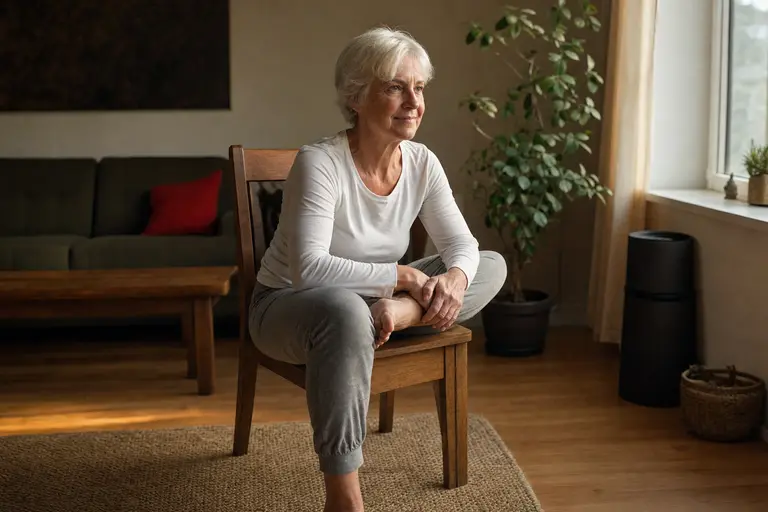
Glute stretches
The best glute stretches are the figure 4 stretch on your back, the seated figure 4 in a chair, the knee to opposite shoulder stretch and the pigeon stretch.
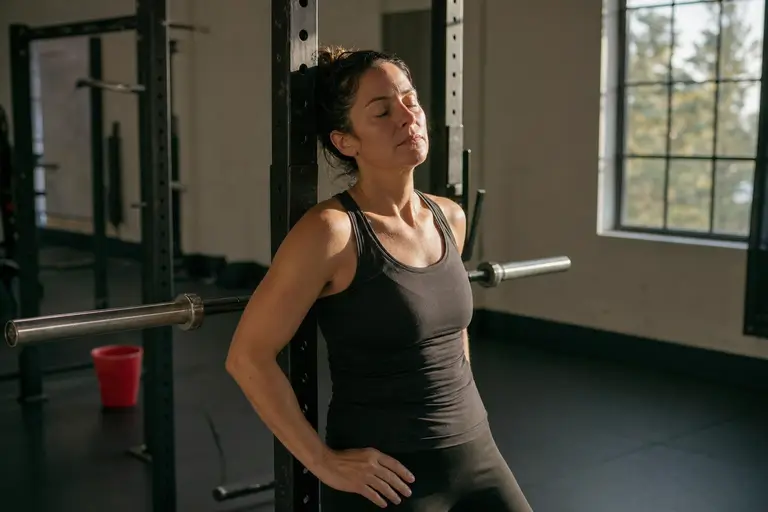
Deload week
A deload is a planned period, usually about a week, of lighter training to let your body recover, most often by cutting sets or weight.
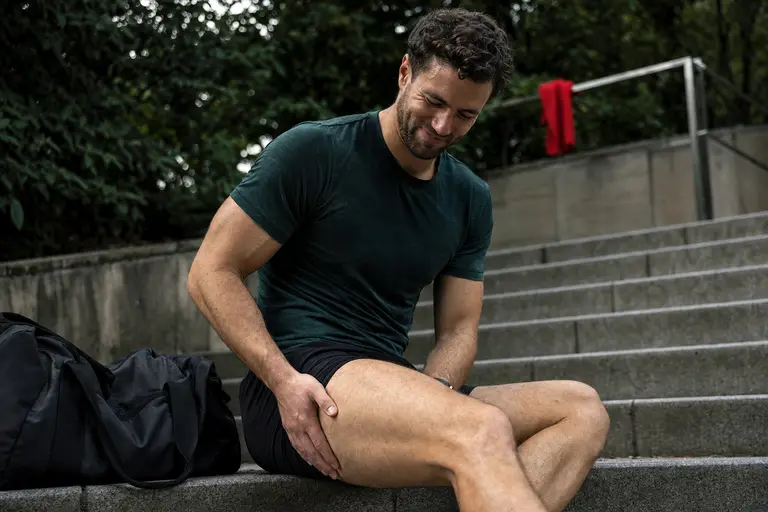
Muscle soreness (DOMS)
Soreness that starts a day or two after a workout is called DOMS (delayed onset muscle soreness).
For trainers and instructors
What the work pays, and ways to earn more from what you already recommend.
Fitness affiliate programs
A fitness affiliate program pays you when someone buys or subscribes through your link or code.
Become an online personal trainer
Get a certification from an accredited program and pick the kind of client you want to coach.
How much nutritionists make
In the US, the median dietitian or nutritionist earned $76,400 a year, or $36.73 an hour, in May 2025, according to the Bureau of Labor Statistics.
How much personal trainers make
In the US, the median fitness trainer earned $47,160 a year, or $22.67 an hour, in May 2025, according to the Bureau of Labor Statistics.
How much Pilates instructors make
In the US, Pilates instructors earn roughly $33 to $36 an hour on average, according to the salary estimates gathered by IDEA Health & Fitness Association in 2025.
How much yoga instructors make
In the US, yoga instructors earn roughly $24 to $38 an hour, depending on the estimate. Salary.com puts the average at $50,630 a year for full-time work, and PayScale puts the median at $28.15 an hour, according to figures gathered by IDEA Health & Fitness Association in 2025.
5 upsells for personal trainers
The best upsells for personal trainers are ones that help clients between sessions: an online check-in plan, small group or partner sessions, regular progress reviews, general nutrition coaching within your scope, and an app subscription you earn from through a partner program.
Training with an AI assistant
Using your AI assistant to log workouts and food, and to plan what comes next.
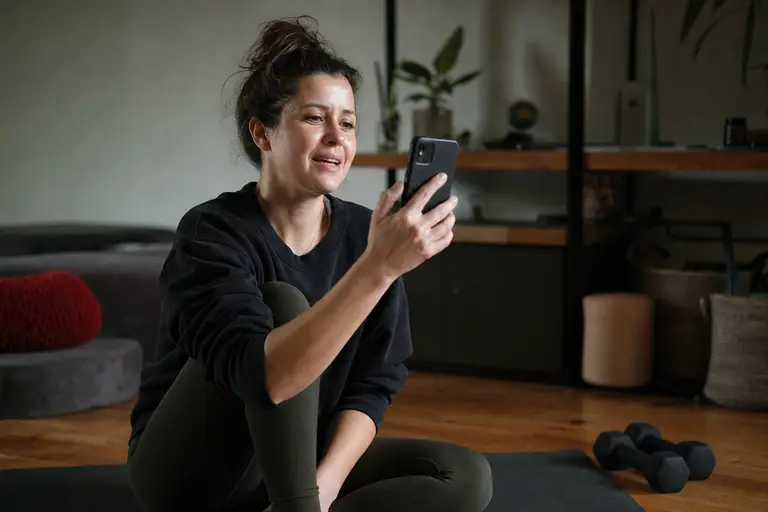
AI personal trainer
An AI assistant can do much of a trainer's planning: writing workouts, adjusting them week to week and answering questions at any hour.
Can ChatGPT count my calories?
It can estimate them, but it can't keep a running total on its own: a chat isn't a food log, and yesterday's numbers scroll away.
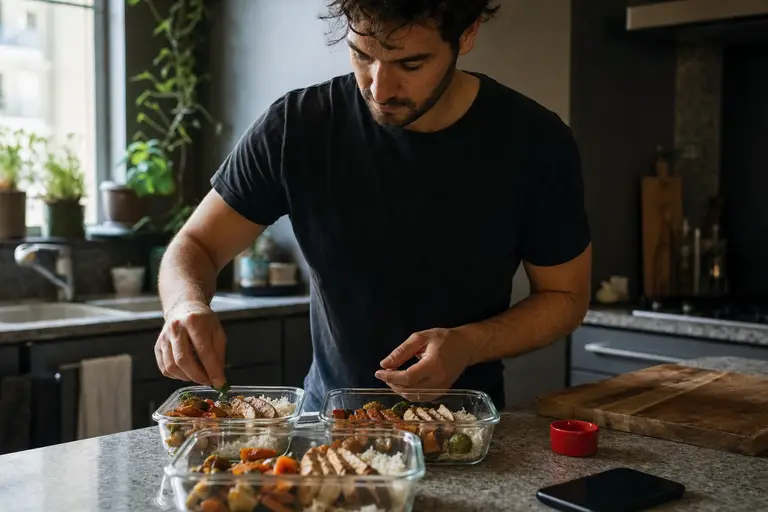
Can ChatGPT make a meal plan?
It can help, but check the numbers. A 2025 study found ChatGPT's recipes came close to the calories requested, while its full-day meal plans were less reliable.
AI that reads your Apple Watch workouts
Yes. With TrainRec, the assistant you already use can read the workouts your Apple Watch records.
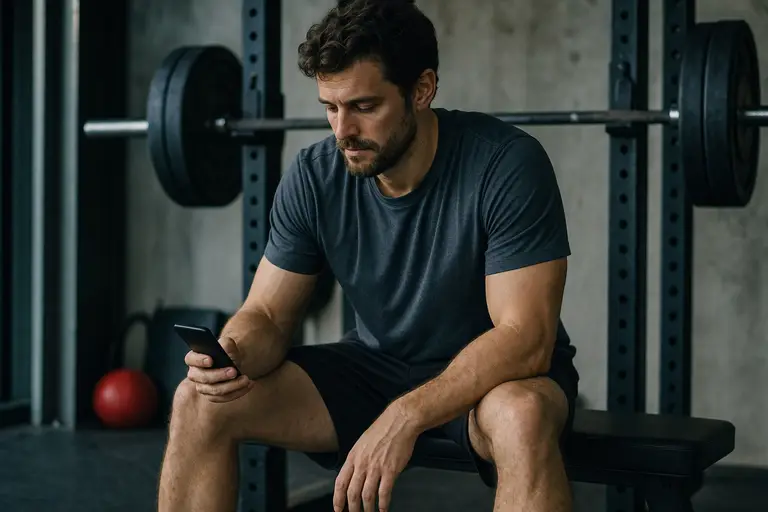
Can ChatGPT track my workouts?
Yes, once it has a log to write to. On its own, ChatGPT can plan a workout, but a chat is not a log: past chats scroll away, and it can mix up numbers from weeks ago.
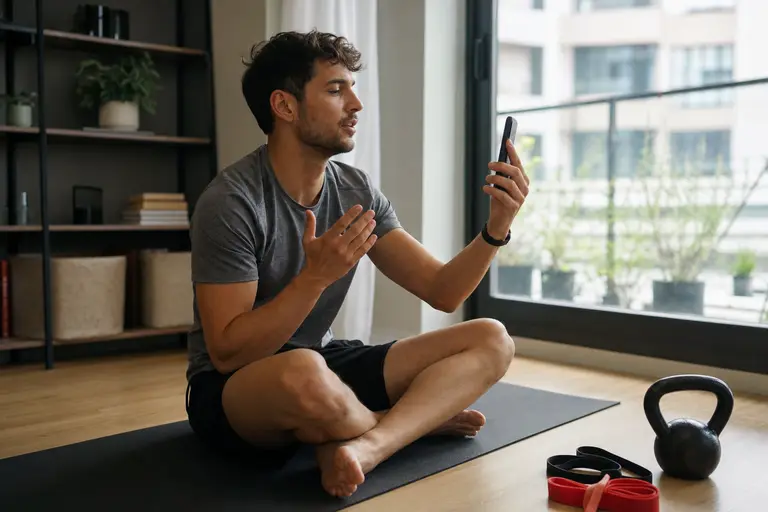
Can ChatGPT write a workout plan?
Yes. ChatGPT and other AI assistants can write a reasonable workout plan if you tell them your goal, schedule, equipment and experience.
Can Claude track my workouts?
Yes, once it has a log to write to. On its own, Claude can plan a workout and talk it through, but a chat is not a log, and the numbers scroll away with it.
Compare a hike with treadmill walks
Yes, if it can read both workouts. With TrainRec, a hike you record on your Apple Watch lands in your log within minutes, next to your treadmill walks.
AI workouts on Garmin
Not on its own. An AI assistant can write a good plan, but it can't put it on your watch or see what you did.
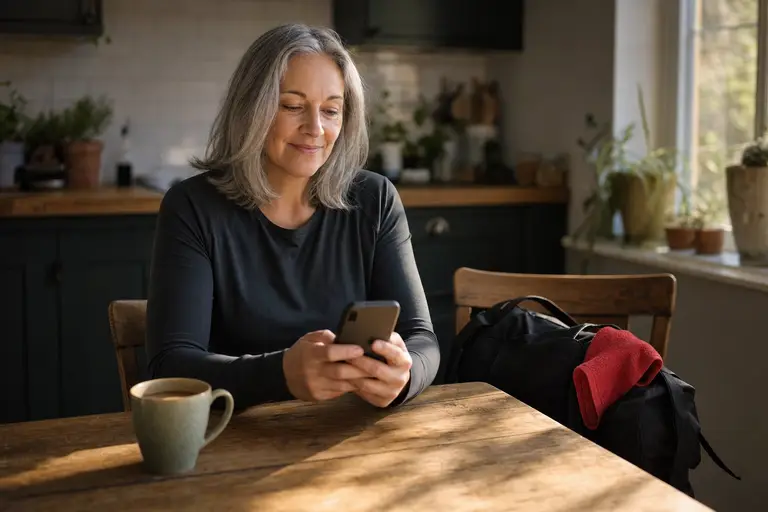
Does Hevy work with ChatGPT or Claude?
Yes for ChatGPT. Hevy's help center describes a Hevy app inside ChatGPT that answers questions about your workout history and saves workout plans to your Hevy account (read November 14, 2026).
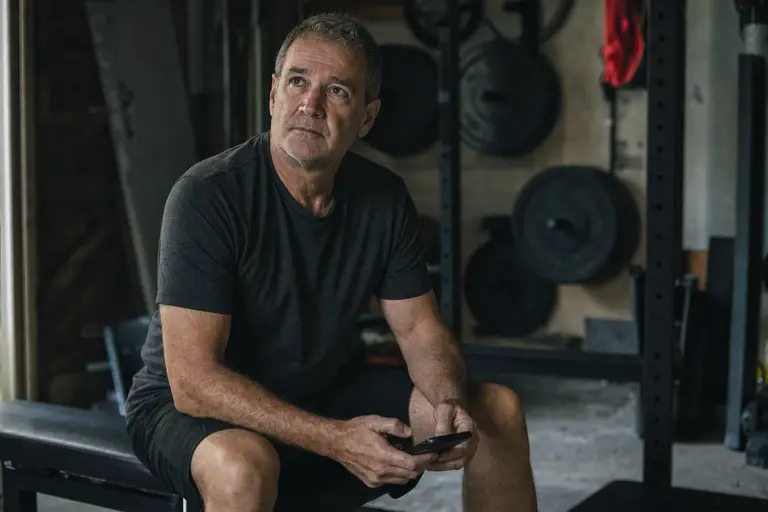
Does my AI assistant remember my workouts?
Only partly. Assistants like ChatGPT, Claude and Gemini can keep some details between chats in a memory feature, but that memory is a short summary, not a record of every set, run and meal.
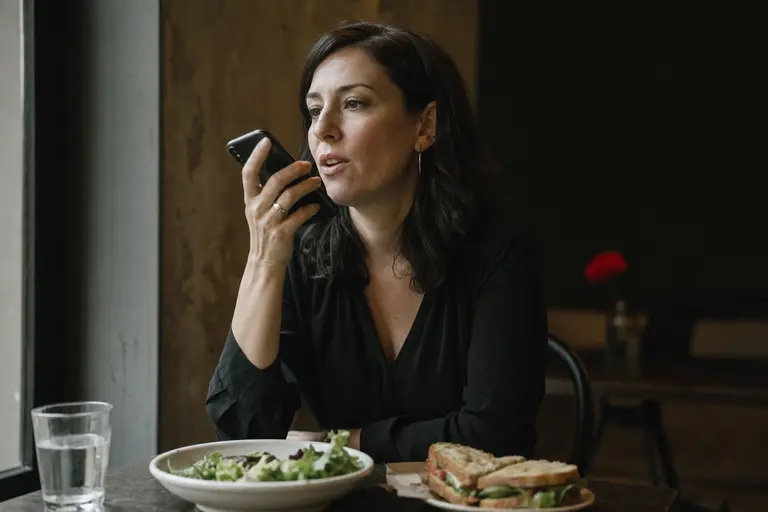
Log food by talking to AI
Tell your assistant what you ate in plain words. It saves the meal to a food log it can update.
TrainRec on Garmin
Install TrainRec on your Garmin watch from the Connect IQ store, open it, and confirm on your phone.
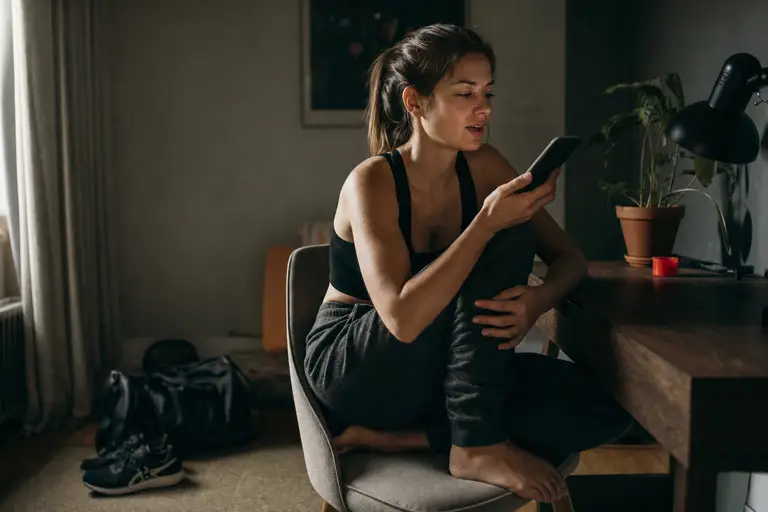
TrainRec with Claude
Add TrainRec as a custom connector in Claude: open Settings → Connectors in the Claude app or on claude.ai, add TrainRec, and sign in when asked, with no password to make up.
App for ChatGPT to log meals and workouts
TrainRec does. It's an app for iPhone and Android that connects to the AI assistant you already use, such as Claude, ChatGPT or Grok, so your assistant saves your meals and your gym workouts to one log.
Prompts for planning workouts and logging food
Say it the way you'd text a friend, with the details that matter. For a plan, say your goal, how many days a week and how long you have, like "Build me a strength routine, three days a week, 45 minutes."