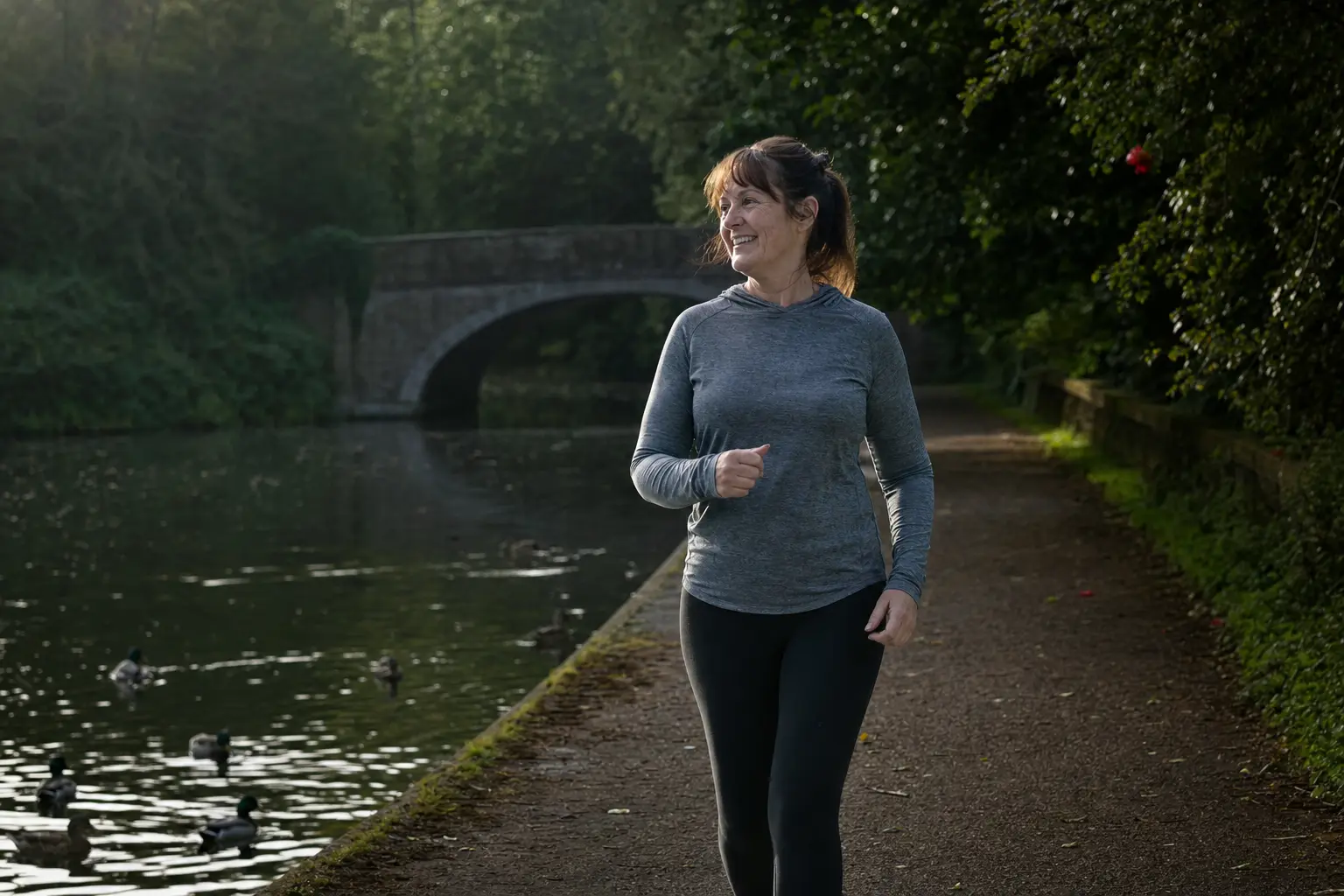
 AI-generated image
Guides · Running and cardio · Updated 2026-11-11
What is a good 5k training plan for beginners?
A good beginner 5k training plan mixes running and walking three times a week for about 9 weeks. Start with 1 minute of easy running and 90 seconds of walking, repeated 8 times, and run a little more each week until you can run about 30 minutes without stopping. Go slowly enough to talk and rest a day between runs. If a week felt too hard, repeat it.
- Warm up with a 5-minute walk. Every session starts with a brisk walk, and ends with a few minutes of easy walking.
- Follow the week's run-walk pattern. Three sessions a week, with a rest day or an easy walk between them.
- Run slowly enough to talk. If you can't speak in full sentences, slow down or walk. Speed comes later.
- Repeat a week when you need to. Move on only when the current week felt manageable. Finishing matters more than finishing on time.
The 9-week plan
Do each session three times in the week. Every session starts with a 5-minute brisk walk and ends with a few minutes of easy walking.
| Week | Each session | Running time |
|---|---|---|
| 1 | Run 1 minute, walk 90 seconds, 8 times | 8 minutes |
| 2 | Run 1 minute, walk 1 minute, 10 times | 10 minutes |
| 3 | Run 2 minutes, walk 90 seconds, 6 times | 12 minutes |
| 4 | Run 3 minutes, walk 90 seconds, 5 times | 15 minutes |
| 5 | Run 6 minutes, walk 90 seconds, 3 times | 18 minutes |
| 6 | Run 7 minutes, walk 1 minute, 3 times | 21 minutes |
| 7 | Run 12 minutes, walk 1 minute, 2 times | 24 minutes |
| 8 | Run 14 minutes, walk 1 minute, run 13 minutes | 27 minutes |
| 9 | Run 30 minutes, or about 5k, without stopping | 30 minutes |
Each week adds only a few minutes of running to a session. If a week felt hard, do it again. There’s no prize for staying on schedule.
Why run-walk works
Your heart and lungs adapt fast. Your tendons and bones take longer. Walk breaks let you build running time without overloading your legs. A large study found that new runners get hurt more often per hour of running than experienced ones, so a gentle start pays off.
Another study compared a slower, more gradual beginner plan with a standard one and found no difference in injuries. That’s why this plan tells you to go by feel: repeat a week whenever you need to, rather than following a stricter formula.
How easy is easy?
Easy means you can talk in full sentences while you run. The US CDC uses this talk test for moderate effort. If you’re out of breath, slow down or walk. You’ll still be training.
For more on starting out, read how to start running.
How to adjust the plan
- Only two days a week? That works too. Expect the plan to take longer, and repeat weeks more often.
- Missed a few days? Go back a week and pick up from there.
- Something hurts? Stop. Some muscle soreness in the first weeks is normal, and it fades in a day or two. Sharp pain, or pain that changes how you run, is a reason to rest and see a professional if it doesn’t settle.
- Want to lift too? Strength days fit well between runs. US guidelines recommend muscle-strengthening work at least 2 days a week.
Race day
Treat your first 5k as one more session. Walk for 5 minutes to warm up and start slower than everyone around you. Take walk breaks whenever you want them. Use the 5k pace chart to see what pace a finish time works out to, or read how long it takes to run a mile to see where your pace sits.
Safety
Check with a doctor before you start if you have a heart condition, diabetes, a past injury or any other health condition. Stop if something hurts, and if you feel faint or get chest pain, stop and get help.
Also asked
How long does it take to train for a 5k from scratch?
About 9 weeks for most beginners, which is the length of the free NHS beginner running plan. Taking 12 weeks by repeating a few weeks is just as good.
Can I walk during a 5k race?
Yes. Plenty of people run-walk the whole way. In a survey of more than 45,000 people at weekly 5k runs, one whole group was walkers, who took 50 minutes or more.
What is a good time for a first 5k?
Any time you finish in is a good first time. For reference, the middle runner in that same survey averaged 29 minutes 20 seconds. See the [5k pace chart](/tools/5k-pace-chart/) for the pace behind any finish time.
Can I do this plan on a treadmill?
Yes. Set the treadmill to a pace where you can talk, and use the same run and walk times.
How many days a week should I run for a 5k?
Three, with a day off or an easy walk between. That gives your legs time to adapt.
What should I do after my first 5k?
Keep running three times a week and add a few minutes to one run each week. When you can run 5 miles, the [half marathon training plan](/learn/half-marathon-training-plan/) is a good next step.
Sources
- NHS, Get running (a free 9-week beginner running plan)
- Buist et al. (2008), No effect of a graded training program on the number of running-related injuries in novice runners
- Videbæk et al. (2015), Incidence of running-related injuries per 1000 h of running in different types of runners
- Haake et al. (2022), parkrun and the promotion of physical activity, insights for primary care clinicians from an online survey
- US CDC, Measuring physical activity intensity
- US Department of Health and Human Services, Physical Activity Guidelines for Americans