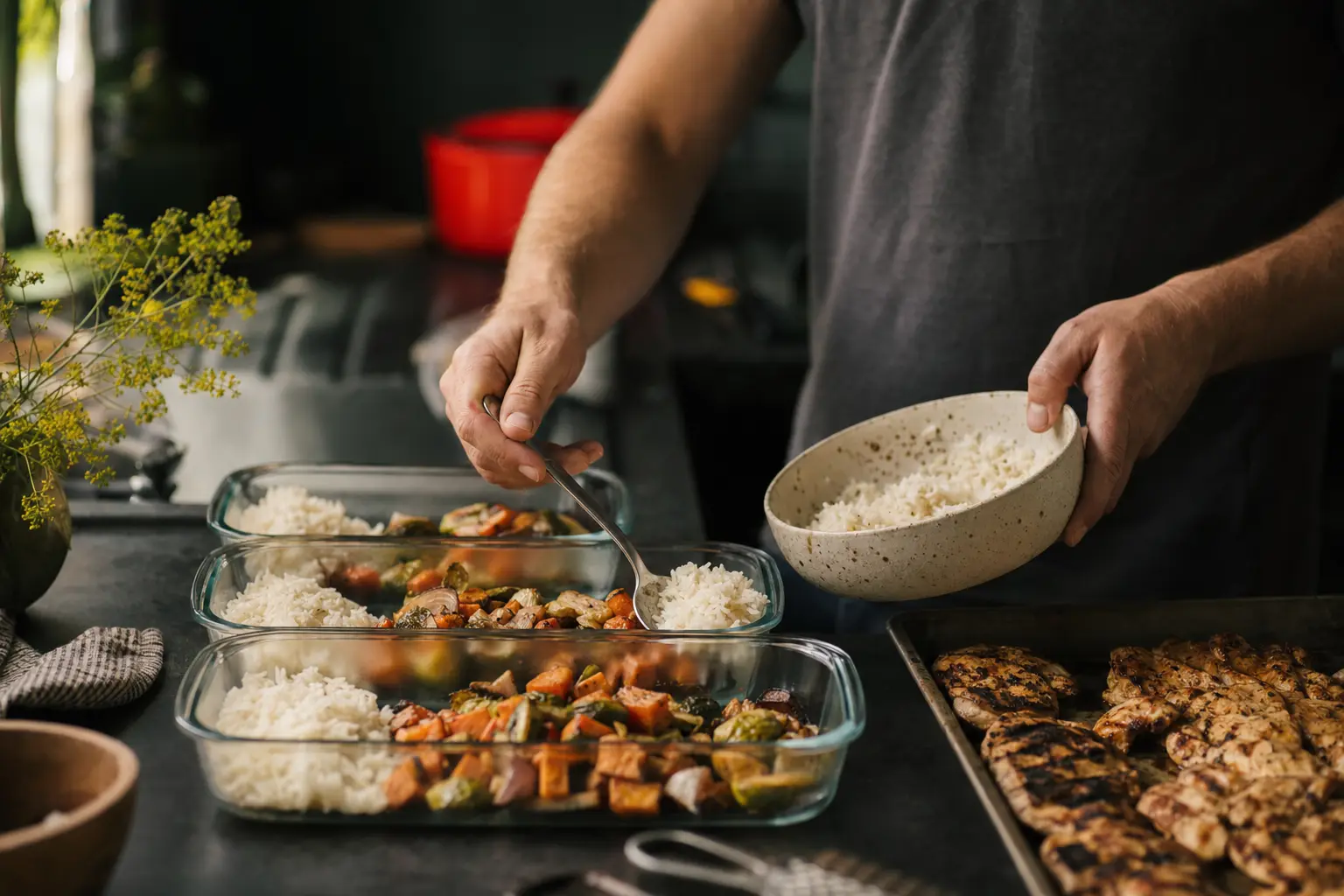
 AI-generated image
Guides · Food and nutrition · Updated 2026-11-11
How do I start meal prepping?
Pick two or three meals you like and cook them in batches once or twice a week, then pack them into portions you can grab. Start with just lunches, so it stays manageable. A study of over 40,000 French adults found people who planned their meals ate a more varied, better-quality diet and were less likely to have obesity. For high protein meal prep, build each container around 20 to 40 grams of protein from a food like chicken, fish, tofu or lentils.
- Plan the week. Choose which meals you'll prep, like weekday lunches. Pick a simple recipe or two.
- Shop with a list. Buy exactly what the plan needs, plus a few easy extras like fruit and yogurt.
- Batch cook. Cook a protein and a carb while a tray of vegetables roasts. It all takes about an hour.
- Portion it out. Split everything into containers so each meal is ready to grab.
- Store it safely. Refrigerate within two hours of cooking and eat within three to four days, or freeze portions for later in the week.
A simple starter prep
| Part | Example | Batch |
|---|---|---|
| Protein | Chicken thighs or tofu | About 1 kg (2 lb) |
| Carb | Rice or potatoes | 4 to 5 portions |
| Vegetables | A tray of roasted broccoli and peppers | 1 large tray |
| Sauce | Salsa, teriyaki or pesto | 1 jar |
High protein meal prep
High protein meal prep works the same way. You just pick the protein first and size it.
How much per container. The International Society of Sports Nutrition suggests about 20 to 40 grams of protein per meal, and about 1.4 to 2.0 grams per kilogram of body weight a day for people who exercise. Use the protein calculator for your own daily number, then divide it by your meals.
What to cook. These are good to batch cook. Numbers are per 100 grams (about 3.5 oz), from USDA data:
| Food | Protein | Calories |
|---|---|---|
| Chicken breast, roasted | 31 g | 165 |
| Salmon, baked | 22 g | 206 |
| Cod, baked | 20 g | 84 |
| Firm tofu | 17 g | 144 |
| Eggs (about 2 large) | 13 g | 143 |
| Low-fat Greek yogurt | 10 g | 73 |
| Lentils, boiled | 9 g | 116 |
| Chickpeas, boiled | 9 g | 164 |
So a 150 gram (about 5 oz) portion of cooked chicken breast has about 46 grams of protein. The same amount of firm tofu has about 26 grams. If you want high protein and low calories, cod and chicken breast give you the most protein for each calorie.
Container ideas:
- Chicken breast with rice and roasted peppers.
- Baked salmon with potatoes and green beans.
- Tofu and broccoli stir-fry over rice.
- Lentil and chickpea curry, with Greek yogurt on top.
For the first meal of the day, see high protein breakfast ideas, many of which keep well in the fridge. Protein in an egg covers eggs in more detail.
Keep it safe
The USDA advises getting cooked food into the fridge within 2 hours, or within 1 hour on a day above 90°F (32°C). Eat leftovers within 3 to 4 days, or freeze them. Reheat until the food is hot all the way through, to 165°F (74°C).
If you’re prepping to lose weight
Portioned meals make calories easy to count. Don’t plan meals that add up to less than about 1,200 calories a day for women or 1,500 for men without a doctor’s help. See how many calories to eat to lose weight. If you have a history of an eating disorder, or planning food starts to feel stressful or controlling, work with a doctor or registered dietitian instead.
What the research says
In a study of over 40,000 French adults, people who planned their meals ahead had more varied, higher-quality diets, and were less likely to have obesity. It shows a link rather than proof that planning causes the difference, but planning ahead is a simple habit to try.
Make it easy to keep up
- Prep on the same day each week.
- Keep two or three recipes on repeat, and add one new one a month.
- Use containers that stack and go in the microwave.
- Write the date on each container.
Also asked
How long does meal prep last in the fridge?
Most cooked meals keep about 3 to 4 days in the fridge. Freeze anything you won't eat by then.
Do I have to eat the same thing every day?
No. Cook two proteins and two carbs, and mix them with different sauces and vegetables through the week.
Is meal prep good for weight loss?
It helps many people because the portions and calories are decided ahead of time, so there are fewer last-minute choices.
How much protein should a meal prep container have?
About 20 to 40 grams for most adults, which is the amount per meal a sports nutrition position stand suggests. Bigger people and people who train hard sit toward the top. The protein calculator gives you a daily number to split across your meals.
What are good high protein, low calorie foods for meal prep?
White fish and chicken breast give the most protein per calorie. Per 100 grams cooked, cod has about 20 grams of protein for 84 calories, and chicken breast about 31 grams for 165 calories. Low-fat Greek yogurt is close behind.
Can I do high protein meal prep as a vegetarian?
Yes. Firm tofu and lentils make a good base. If you eat them, eggs and Greek yogurt add more.
Can I freeze meal prep?
Yes. Freeze portions you won't eat within 3 to 4 days. Thaw them in the fridge and reheat until hot all the way through, to 165°F (74°C).
Sources
- Ducrot et al. (2017), Meal planning is associated with food variety, diet quality and body weight status in a large sample of French adults
- US Department of Agriculture, FoodData Central (nutrient values)
- US Department of Agriculture, Food Safety and Inspection Service, Leftovers and food safety
- Jäger et al. (2017), International Society of Sports Nutrition Position Stand, protein and exercise
- Harvard Health Publishing, Calorie counting made easy