 AI-generated image
Guides · Strength training · Updated 2026-11-09
How do you do a dead hang, and how long should you hang?
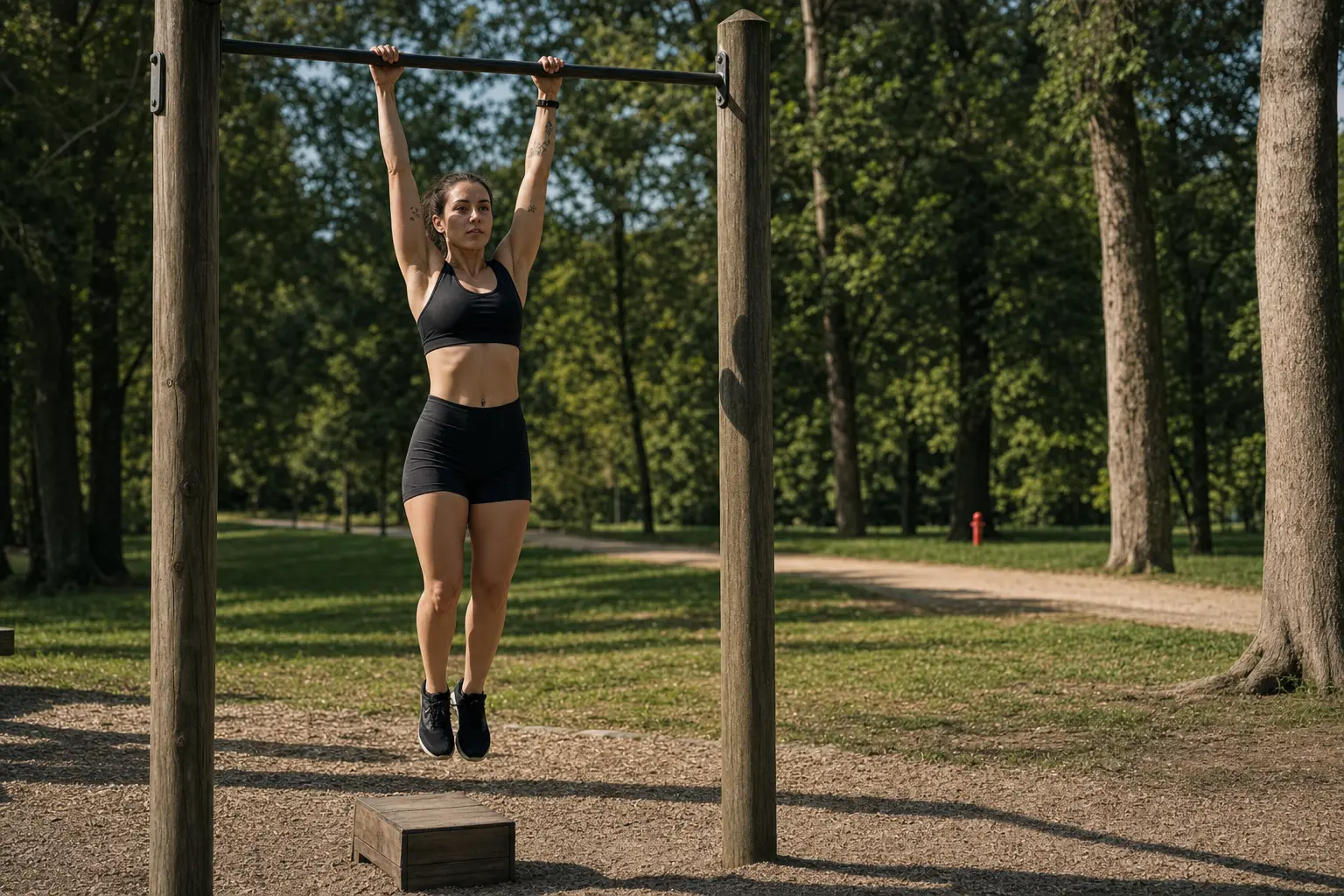
A dead hang is hanging from a pull-up bar with straight arms and your feet off the floor. Step up from a box to grab the bar with an overhand grip, then let your body hang while you keep a little tension in your shoulders. Start with hangs of 10 seconds or less and build up slowly. If your shoulders are loose or have dislocated before, skip it or check with a physical therapist first.
- Set a box under the bar. Put a sturdy box or step under a pull-up bar so you can reach the bar without jumping.
- Grip the bar. Hold the bar with your palms facing away and your hands about shoulder-width apart. Wrap your thumbs around the bar.
- Step off slowly. Step off the box and let your arms straighten until your feet are off the floor. Bend your knees if the bar is low.
- Keep your shoulders on. Don't let your shoulders sink all the way up to your ears. Keep a little tension, as if you're gently pulling your shoulder blades down. Breathe normally.
- Step back down. Put your feet back on the box before your grip gives out. Rest, then go again.
What a dead hang is
A dead hang is simply hanging from a bar with straight arms. People do it to build grip strength and to get used to holding their weight overhead. It’s also a first step toward a pull-up. It needs only a pull-up bar and something to step up from.
Two university researchers writing in The Conversation describe dead hangs as most likely suitable for people with good upper-body strength and no shoulder problems.
Who should be careful
Hanging pulls the ball of your shoulder away from its socket. For most people that’s fine. For people with loose (hypermobile) or unstable shoulders, those same researchers warn that hanging your full body weight can stretch the tissue further and lead to painful instability. If your shoulders have dislocated before, or often feel like they might slip, check with a physical therapist before you hang.
Their safety tips:
- Start small. Hang for 10 seconds or less at first, and build up slowly.
- Step up, don’t jump. Use a box so you don’t drop into the hang.
- Keep some tension. A completely limp hang puts more strain on the shoulder.
- Stop before you’re worn out. A tired shoulder is a less stable one.
Common mistakes, and fixes
| Mistake | Try |
|---|---|
| Jumping up to the bar | Step up from a box and lower into the hang |
| Hanging completely limp | Keep a little tension, as if pulling your shoulder blades down |
| Hanging until your grip fails | Step down while you still have a few seconds left |
| Holding your breath | Breathe slowly the whole time |
Easier and harder versions
- Easier: feet on the floor. Use a low bar and keep your toes or a bent knee on the ground, so your arms hold only part of your weight.
- Easier: shorter hangs. Do more short hangs of a few seconds with rest between.
- Harder: longer hangs. Add a few seconds to each hang as your grip improves.
- Harder: scapular pulls. From a hang, pull your shoulder blades down without bending your elbows, then relax. This is the next step toward a pull-up.
Sets and reps to start with
Start with 2 to 4 hangs of up to 10 seconds, with about a minute of rest between, two or three days a week. A 2026 position stand from the American College of Sports Medicine advises at least two sets per exercise and training at least twice a week.
How fast can hang time go up? A very small test from a training institute had four untrained young men do 6 hangs per session, with 60 seconds of rest between, for 5 sessions over two weeks. Their best hang times rose by about 30% on average. With only four people, treat that as a hint, not proof.
Safety
If you have a shoulder injury or have had shoulder surgery, check with a doctor or physical therapist before you try dead hangs. Make sure the bar is solid and the box won’t tip. Stop if you feel sharp pain or your shoulder feels like it’s slipping.
For more grip work, try the farmers carry. For a stretch that pairs well, see the couch stretch.
Also asked
How long should I dead hang?
Start with 10 seconds or less, as two university researchers advise. Repeat it a few times with a minute of rest between, and add a few seconds as it gets easier. There's no single standard to aim for. Longer isn't better if your grip or shoulders give out.
Are dead hangs good for your shoulders?
For people with good upper-body strength and healthy shoulders, they're usually fine. Hanging pulls the ball of the shoulder away from the socket, so they aren't a good choice if your shoulders are loose or have dislocated before. Keep some tension in your shoulders rather than hanging completely limp.
Do dead hangs improve grip strength?
They may. Two university researchers note that hanging may improve grip strength and endurance in rock climbers. In a large study of about 140,000 adults in 17 countries, people with a weaker grip had a higher risk of death over about four years. That study didn't test whether training your grip changes that risk.
Do dead hangs help you do a pull-up?
Yes, they're a common first step. Hanging builds your grip and gets your shoulders used to holding your weight overhead. Our guide on how to do a pull-up starts with dead hangs.
Should I hang actively or passively?
Keep some tension. Two university researchers warn that hanging fully limp is risky for the shoulder. They also suggest stopping before you get tired, since the shoulder is less stable when it's fatigued.
Sources
- Ganderton and Warby (2023), What are dead hangs? What are the shoulder pain risks and how do I do them safely? (The Conversation)
- Shaul (2026), Mini study: two progression methods improve max dead hang time in untrained athletes (Mountain Tactical Institute)
- Leong et al. (2015), Prognostic value of grip strength: findings from the Prospective Urban Rural Epidemiology (PURE) study
- Currier et al. (2026), American College of Sports Medicine position stand: Resistance training prescription for muscle function, hypertrophy, and physical performance in healthy adults