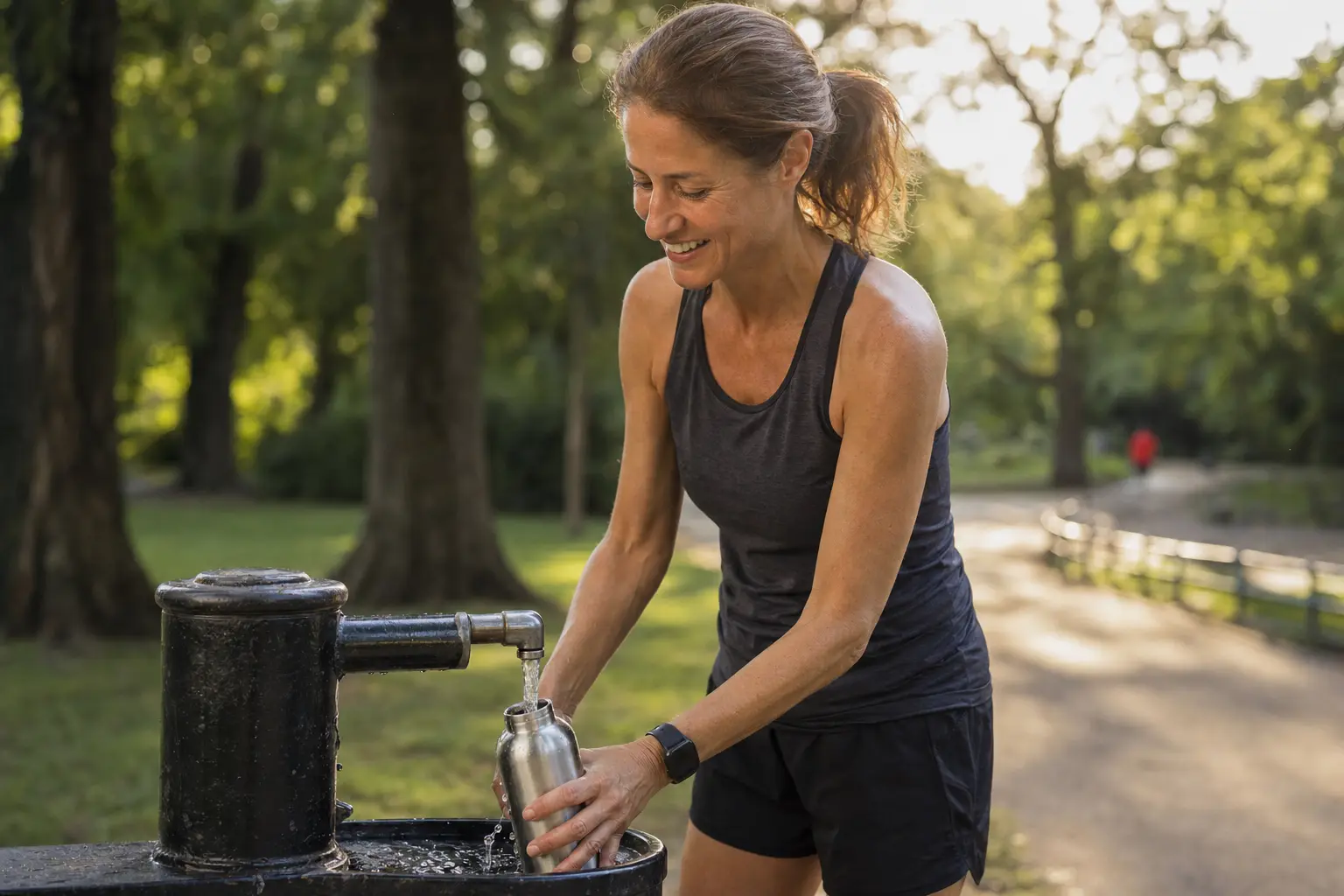
 AI-generated image
Free tools · Updated 2026-11-09
Water intake calculator
Most healthy adults do well on about 2.7 liters of total water a day for women and 3.7 liters for men, by the National Academies' figures. About 80 percent of that comes from drinks, so plan on roughly 73 ounces (9 cups) for women and 100 ounces (12.5 cups) for men, plus more on days you exercise or it's hot. Enter your details to see your number.
About 85 oz (10.5 cups) from drinks today
| Everyday amount from drinks | 73 oz (9 cups) |
| Extra for exercise | 12 oz (1.5 cups) |
| Total water, counting food too | 103 oz (13 cups) |
Thirst is a good guide for most healthy people. Spread drinks through the day rather than all at once.
How it works
The everyday amount comes from the National Academies. They set an adequate intake of total water of 2.7 liters a day for women and 3.7 liters for men, based on what healthy, well-hydrated people take in. About 20 percent of that comes from food, so the calculator shows 80 percent of it as drinks.
Exercise adds one cup (8 ounces) for every 20 minutes, or every 15 minutes in hot weather. That follows the CDC's advice for moderate work in the heat, a cup every 15 to 20 minutes. Sweat rates differ a lot from person to person, so treat the extra as a starting point.
Find your own sweat rate
The American College of Sports Medicine suggests weighing yourself before and after exercise to see how much you sweat. Weigh with little or no clothing, then again after you towel off. The weight you lost, plus anything you drank during the session, is about how much you sweated. A pound is about 15 ounces of water, and a kilogram is about a liter.
Their aim is to keep losses under about 2 percent of body weight during exercise, without drinking more than you sweat.
Days you need more
Long sessions and hot or humid weather raise your needs. The National Academies note that very active people in constant heat often need 6 liters of total water a day or more. For a long walk with a weighted pack, see our rucking guide and rucking calorie calculator.
If you are pregnant or breastfeeding, your needs are higher than these figures. Ask your doctor or midwife what's right for you.
Keep it safe
People with kidney disease may need to limit how much they drink, because their kidneys can't remove the extra fluid. If you have kidney disease, or your doctor has given you a fluid limit for any reason, follow that instead of this calculator. During long events, drink to replace what you sweat rather than as much as you can.
Also asked
How much water should I drink a day?
The National Academies set an adequate total water intake of about 2.7 liters (91 ounces) a day for women and 3.7 liters (125 ounces) for men. About 80 percent of that usually comes from drinks, which is about 73 ounces for women and 100 ounces for men. The rest comes from food.
Is 8 glasses of water a day right?
It's a rough guide, not a rule. The National Academies chose not to give a number of glasses, and said most healthy people meet their needs by drinking when thirsty and with meals.
Do coffee and tea count toward water?
Yes. The National Academies found that caffeinated drinks count toward your daily water just like other drinks, with no convincing evidence that caffeine leaves you short over the day.
Why does this calculator not ask for my weight?
The National Academies set the daily figure by age and sex, not by body weight. What changes your needs most is sweat, from exercise and hot weather, so the calculator asks about those.
Can you drink too much water?
Yes, though it is rare. Drinking far more than you sweat out during long events can drop the sodium in your blood to dangerous levels. For work in the heat, the CDC advises no more than about 6 cups an hour.
Sources
- National Academies (2004), Report sets dietary intake levels for water, salt and potassium
- CDC and NIOSH, Heat stress recommendations
- American College of Sports Medicine (2007), Exercise and fluid replacement position stand
- Kenefick (2018), Drinking strategies: planned drinking versus drinking to thirst, Sports Medicine
- National Institute of Diabetes and Digestive and Kidney Diseases, Eating right for chronic kidney disease